India still a sour grape for world's wine-makers


|
Indians are beginning to experiement with indiginous wine |
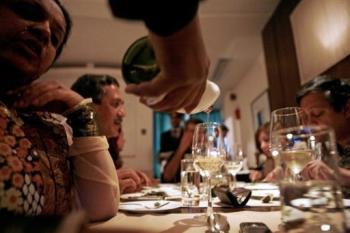
The 29-year-old with cropped hair was one of the more curious at a recent wine appreciation event where a group of 20 sniffed and sipped on a sultry New Delhi evening.
Chand returned to India two years ago from Singapore where she acquired a taste for wine -- increasingly a marker of hipness and class in India.
Now she says she drinks mostly Indian wines.
"They're cheaper and I really feel they're not bad," she said at the tasting organised by the six-year-old Delhi Wine Club.
Foreign winemakers may gnash their teeth -- and connoisseurs turn up their noses -- but there is little they can do as a boom in wine drinking appears to be passing them by.
The quality of Indian wine varies enormously, with the better regarded vineyards relying on French and American experts to produce to international standards, while others simply use table grapes.
After one tasting, US wine blog Vinography praised several Indian wines, including a popular white for its apple flavours and "smooth, silky body," but urged drinkers to avoid others, noting that one red smelled of "wet Band-aids".
For some in the industry, quality is relative.
"If you compare the quality of India's wines to China or any other new wine countries, we are ahead in terms of quality," said Aman Dhall, director of liquor distributor Brindco, India's largest wine importer, adding there is plenty of room for improvement.
"We have to continuously produce better quality wine."
But Dhall is bullish on domestic wines -- in spite of a slash in import duties last summer, a complex web of levies, taxes and mark-ups that keep foreign wines out of reach for all but the wealthiest Indians.
The cheapest glass of domestic plonk in a restaurant costs about 300 rupees or roughly seven dollars -- more than two days' salary for the average Indian.
Wine magazine Sommelier India reported recently the capital's colonial-style Imperial Hotel had within a month sold six bottles of a French wine bottled in 1947, the year the country became independent, at 100,000 rupees each.