Higher quality, lower yield


As Sonoma County grape harvest kicks into gear, experts say crop starting out lighter than normal, but fruit appears above average
As the Sonoma County grape harvest begins in earnest this week, growers and winery owners are predicting a high-quality but unusually light crop, perhaps 10 percent to 20 percent below average.
"In general, the quality looks good across the board," said Brian Clements, a broker with Turrentine grape brokerage in San Rafael. "But all of us agree the crop is down and appears to be getting lighter as we get closer to harvest."
|
SCOTT MANCHESTER / The Press Democrat The harvest of grapes for still wine begins with the first load being crushed at Rodney Strong Wine Estates in Healdsburg on Thursday. Growers and vintners say it looks like this year's crop will be good quality, but lighter than normal. |
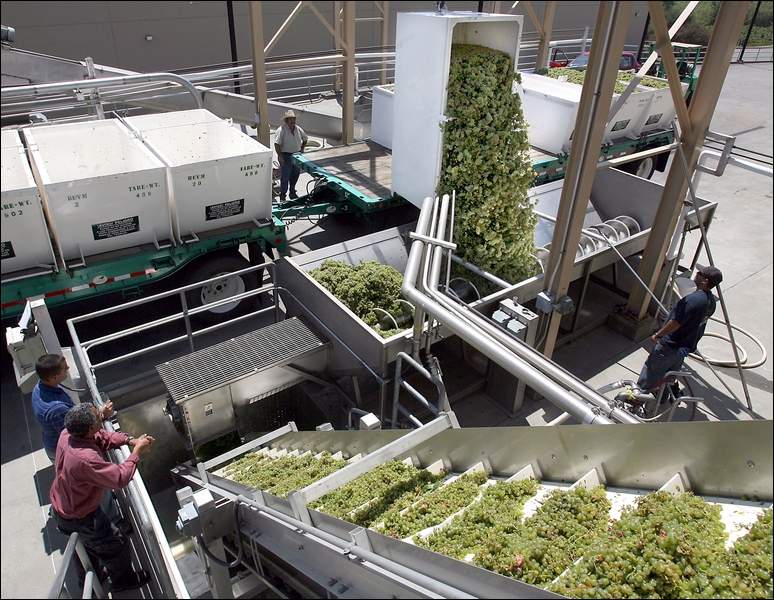
The grapes came from a 4-acre vineyard block at the toasty northern tip of Sonoma County, a place called Cooley Ranch in the Oat Valley near the Mendocino County line.
The vineyard block typically yields 24 tons, or 6 tons per acre, but this year only offered up 19 tons, or 4.75 tons per acre, said Douglas McIlroy, director of winegrowing for Rodney Strong.
"Last year we were light, but it looks like we're going to be even lighter this year,"
McIlroy said.
The smaller crop didn't dampen spirits at the towering crush pad at Rodney Strong where the grapes were delivered. Employees cheered as a crane tipped the first load of grapes from the back of a flatbed truck into a massive hopper.
Rick Sayre, director of winemaking, said he hoped the harvest was a safe one for the workers who will toil in the fields and in the winery for the next several weeks.
Two Catholic priests then blessed the grapes.
"Without your labor, I wouldn't be able to drink wine," the Rev. Walt Rogina of St. John the Baptist Catholic Church in Healdsburg told several dozen employees gathered for the celebration.
As people sipped cool 2007 sauvignon blanc, the grapes that will make the 2008 vintage ascended a belt conveyer high overhead and fell into a massive press, where they were gently squeezed to separate the juice from the skins and stems.
Thursday's single load of grapes will build to dozens per day as the harvest gathers steam. Sayre said some of his pinot noir grapes are already showing sugar levels of 23.5 brix, a sign they will be picking red grapes before long, as well.
If current warm weather patterns persist, some predict that crush could be squeezed into just a few hectic weeks.
"I think in September, everything is going to come in helter skelter," said Nick Frey, president of the Sonoma County Wine Grape Commission.
Frey agrees the crop appears be light, but is cautious about raising the alarm too soon.
Vineyards that have light crop loads tend to ripen earlier than others, which means the very first vineyards harvested aren't necessarily the best indicators of the overall harvest.
"The first to come in are often the ones that are most affected by the weather, and the last ones to come in are often the ones that have a large crop," Frey said.
The season began with a dry spring, which allowed the ground to warm up quickly, kick-starting the vines to grow a little too soon. Brutal frosts followed in April, striking many places considered immune from the peril and therefore lacking frost protection.
As if that weren't enough, Mother Nature then threw high winds and heat spikes at the battered vineyards, leaving growers feeling whipsawed. Growers are also eager to forget the forest fires that cast a pall over vineyards for weeks on end.
Since those early hurdles, however, the growing season has been nearly perfect, Frey said.
"Most of the year, as long as your grapes had water, you couldn't ask for any more ideal conditions," Frey said.
From a winemaking perspective, the dry growing season has been great because it induced "moderate stress" on the vines, which limited growth of the canopy and focused the vines' energy on the grapes, McIlroy said.
It also meant growers didn't have to spend as much time and money sending crews into the vineyards to trim back excessive vine growth, he said.
Frey now predicts a total Sonoma County grape harvest of around 180,000 tons, or 10 percent off the county's average of about 200,000 tons.
The upside of the lighter harvest for growers is that grape prices are rising, Clements said.
"We have wineries coming back into the market buying cabernet sauvignon, chardonnay and even merlot because they believe the crop is going to be lighter than expected," Clements said.
Quality Sonoma County chardonnay, from regions like the Sonoma Coast, Russian River and Carneros appellations, as well as Napa cabernet, are fetching up to 30 percent more than they were at the beginning of the year, Clements said.
"It's frustrating for both sides when the demand is there but the grapes aren't," Clements said.