Moth Quarantine No Problem So Far


But restrictions will spread from Sonoma Valley to parts of Carneros next week
|
PHOTO: Todd Gilligan |
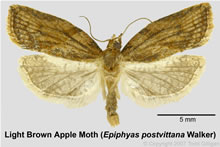
Readers may recall that the California Department of Food & Agriculture (CDFA) imposed the quarantine on May 5 on an area that includes an estimated 1,500 acres of prime winegrape vineyards, after a single moth was discovered there in February and another trapped in April ("Quarantined Sonoma Growers Anxious"). At the time, growers within the restricted area expressed some anxiety about CDFA's plans for inspection and treatment of the pest, which is harmful to a wide range of agricultural and ornamental plants. Since wineries within the zone are few, small and primarily estate operations, independent growers there sell most of their crop to wineries elsewhere.
Since then, however, CDFA, working with the Sonoma County Agricultural Commissioner, has maintained a series of traps and inspections, and no more LBAM have been found, allowing for a streamlined procedure during harvest.
"The ag commissioner has come out, inspected the vineyard rows for signs of the insect, then issued a seal certifying that the vineyard is LBAM-free. A copy of the seal must be attached to every load shipped out of the area," explained Nick Frey, executive director of the Sonoma County Winegrape Commission. Frey told Wines & Vines that the inspections must take place within 30 days prior to harvest, meaning that vineyards where harvest started early for sparkling-wine programs probably would require multiple inspections as the crush continues for still wines.
Frey speculated that since no further infestations have been discovered in the zone, the two LBAM found earlier may have hitchhiked or been wind-blown into the area.
However, he said, just last week another single LBAM was found south of the quarantine zone, in the Sonoma Carneros AVA near Ramal Road, very near the Napa County line. One LBAM, he said, calls for trapping and monitoring. Two, though, mean trouble.
|
Napa County Agricultural Commissioner Dave Whitmer |

"CDFA will establish a quarantine zone, including inspection requirements and compliance agreements for growers and receiving wineries," Whitmer said, noting that the Napa LBAM was found on property owned by the Fish & Game Department near where Duhig Road (Napa County) turns into Ramal Road (Sonoma County).
"This does add another dimension to the harvest," Whitmer acknowledged, but he advised growers to "Keep it in perspective. This was one moth in one trap in that (Napa) location; there was one moth in another trap in Sonoma."
And, he added, although inspections can put a strain on manpower during a busy harvest, "We went through this exercise last year. We'll work it out." He reported that during the 2007 harvest, a couple of LBAM had been spotted on the other side of Napa County, near American Canyon, but the CDFA did not define a quarantine area.
"We've got to recognize the situation the growers find themselves in, and take it one step at a time. The goal is not to spread LBAM. We need some regulation on commodities that could be moving LBAM. We want to work with the industry, with the least possible interruption of their activities."
Sonoma County agricultural commissioner Lisa Correia confirmed that CDFA will announce its quarantine of part of the Carneros AVA next week, and said this will contain even more winegrape acreage than the original zone, where numerous inspections have already taken place. But, she said, "We have been gearing up for the field inspections. We have planned and been well prepared, and CDFA staff will be assisting."
According to Correia, at the suggestion of her staff, an option was made available to growers whose vineyards are not inspected. As detailed on the commission's website, sonoma-county.org, "Winegrapes may be tarped from the growing site to the winery under specific requirements, rather than be inspected within 30 days prior to shipping." Requirements include covering the transported grapes with tarps, in trucks clean of plant debris, and with a compliance agreement from the receiving winery.
Correia added that, if no further LBAM infesta tions are discovered in the original zone, the quarantine should be lifted there by the end of this October.
The CDFA has a useful fact sheet on the LBAM quarantine at: cdfa.ca.gov.