It started in red jug wine; now Gallo sees a future in China and tequila


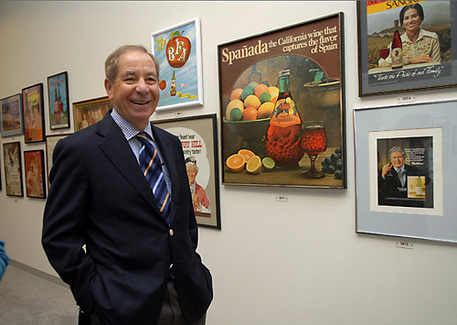
"We had certain principles that we've always been guided by. One is to stay independent and be master of our own destiny. Run the company conservatively. Don't take on too much risk. ... Invest in innovation ... and be very attuned to what the customer wants," said Gallo, son of co-founder Ernest Gallo and now E.&J. Gallo Winery's president and chief executive officer.
Bob Gallo, co-founder Julio Gallo's son, and Jim Coleman, Julio's son-in-law, are co-chairmen of the privately held company's board of directors, putting the family's second generation firmly in control of the business.
Members of its third generation -- often called G-3 -- occupy key roles. Fifteen members of the family work for Gallo, including a couple from the fourth generation.
The story of how Ernest and Julio Gallo founded their winery has been told often. But the inside story rarely revealed is how the brothers -- and subsequently their children and grandchildren -- expanded the family business to more than $2 billion in annual sales.
"You have to remain relevant," stressed Joe Gallo, 65. A company must "have an ability to spot opportunities. It's almost like an art form. They come along every day, and it's amazing how the best of people don't see it. But they're there every day."
For 75 years, the winery has capitalized on opportunities and repeatedly reinvented itself -- and the wines it produces.
That will continue, Gallo assured. He revealed company plans to expand into hard liquor like tequila, push wine sales into China and Russia, reintroduce an old favorite (sangria) and prepare for the next hot-selling varietal (perhaps malbec).
The winery sold more than 70 million cases last year, and Gallo said the company is "growing at a pretty healthy rate."
Evolution of a company
Its beginnings were much more humble. Starting with borrowed money in August 1933, the founders rented a warehouse at 11th and D streets near downtown Modesto.
Joe Gallo gave The Bee a tour of that ivy-encased Founders Building, which now hosts a private exhibit of the winery's artifacts -- including wine bottles and print advertisements from throughout the decades.
A walk around that showroom and the current public exhibit at the McHenry Museum in downtown Modesto demonstrates the company's evolution.
"When my dad and uncle began business, the market was basically red jug wine. They'd send barrels to these little taverns, and people would come with jugs, fill them up and take them out," Gallo said. "Wine was sold mostly to the immigrants."
In its quest to satisfy and cultivate customer demand, Gallo wines continually have changed. The company started with dessert wines -- port, sherries and muscatel -- then introduced specialty brands like Thunderbird, Boone's Farm and Ripple. Gallo's table wines, like Hearty Burgundy, Chablis Blanc and Carlo Rossi, eventually gained in popularity.
"Up to 1974, we did not make varietal wines," explained Gallo, who joined the company full time in 1965. "We didn't even have chardonnay, cabernet or merlot or sauvignon blanc grapes planted. So we came out with secondary varietals like barbera, chenin blanc and French colombard, which was really a stop-gap measure. Then we quickly started planting the real varietals people wanted, and the market moved in that direction."