Okanagan Winemaker Goes Wild


One accidental natural yeast fermentation leads to another
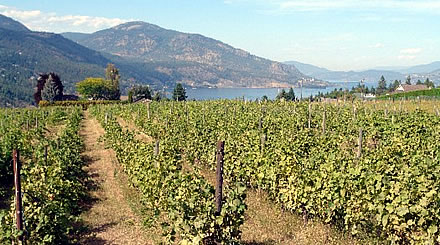
Rollingdale now grows its own grapes, but a free bin of Chardonnay four years ago inspired owner Steve Dale to experiment with wild yeast.
Kelowna, B.C. -- When he was offered a bin of Chardonnay grapes for free back in 2004, winemaker Steve Dale wasn't about to turn it down. He had just started his own winery, Rollingdale, on the outskirts of Kelowna, B.C., and a gift of grapes wasn't to be refused.
But there was a catch: The grapes had been sitting in a parking lot for 10 days and looked well-baked. It didn't get much better when he crushed them--the juice was like water from a cement mixer, gray and unappetizing.
When the must was filtered and the wine made, however, the result was unique--and satisfying. The fermentation process had already started in the bin, yielding a wine that was both tannic, thanks to the inadvertent whole-bunch fermentation that took place, and a bit hot: the alcohol reading was 14.8%. But the wine was full-bodied and satisfying, without the "bready" character sometimes associated with many wines made with commercial yeasts.
"It has an earthier character," Dale told Wines & Vines, struggling for the right description.
|
REGION: NORTHWEST |
That day arrived last fall, when the Stoney Slopes vineyard near Okanagan Falls sold him some Chardonnay as well as a small amount of Sémillon grapes. Dale crushed the grapes, didn't add any commercial yeasts, and let the wine age in new French oak for six to seven months before putting it in steel tanks. The fermentation process was slower than with commercial yeast, but resulted in a unique wine that will be released in November, in a limited quantity of about 180 cases.
While he hasn't done any research on the exact strains of yeast in the mix, Dale expects that they're a mix of just about anything that's in the local environment, from naturally occurring yeasts to commercial strains ditched with must composted by local wineries.
"The skins there will be picking up yeasts from whatever people are dumping around them," he said. "I haven't put them under a microscope to try and figure out what they are."
Saccharomyces cerevisiae is the yeast species typically associated with winemaking because it can tolerate alcohol levels in excess of 13%. It usually rises to predominate in the fermentation process, regardless of what yeasts were originally present in the must.
The use of indigenous yeasts in B.C. is rare, said Dr. Hennie van Vuuren, an internationally recognized pioneer in yeast research and director of the Wine Research Centre at the University of British Columbia in Vancouver, B.C. All of the wineries he works with use commercial yeasts.
"People have found that if you inoculate you get a more consistent fermentation, and different yeasts provide different flavor compounds in the wines," he said.
While some winemakers in regions such as Burgundy produce outstanding wines without using commercial yeasts, the desire for consistent fermentations and the opportunities to choose strains suited to specific grape varieties is what attracts winemakers to commercial yeasts. A wild yeast ferment doesn't offer that.
"It doesn't guarantee success the next year, because the yeast population is different. And that's the problem. There's no consistency, because you have to rely on which yeasts are available," van Vuuren said.
Nevertheless, Dale is willing to live with the uncertainty for the occasional batch, trusting the yeast to multiply as nature dictates and produce something a bit different. "It's nice to step out of the mold and make something that stands apart," he said. "It's fun for us geeks that just like to try something different."