Dirty names


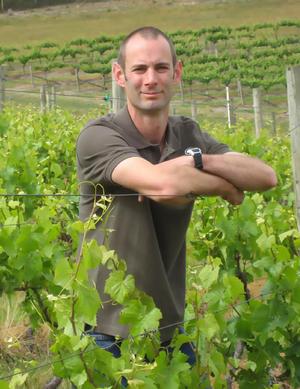
James Lance of Diamond Valley Vineyards
After a recent successful tour of the eastern states, the Pinot South group - five pinot noir producers who promote their pinot noir wines together - sat down for a celebratory dinner at Tetsuya's in Sydney.
As Robin Brockett, winemaker at Scotchman's Hill and a member of Pinot South, flicked through the pages of its award-winning wine list, he came upon one of his own wines and noted, with a little exasperation, that the sommelier had listed it as a wine from the Mornington Peninsula.
Which is sad really, because Scotchmans Hill is on the Bellarine Peninsula in Geelong. But it was topical because the Pinot South makers had just spent a week talking to consumers and press about Geographical Indications, a code of Australian wine laws that denotes our wine zones, regions and subregions.
What they found was that, just like the professional sommelier at Tetsuya's, wine drinkers are often flummoxed by all the geographical place names on wine labels.
"Many find the whole thing intimidating," explains Brockett.
"Everyone was interested in the brand first and then the region where it comes from, but there was no interest in subregions. People were saying, 'Don't confuse us'."
It can be confusing. But that doesn't stop winemakers, pinot noir makers in particular, from localising their product down to smaller and smaller bits of dirt.
Take the group of Pinot South.
Of the five members - Diamond Valley Vineyards, Paringa Estate, Nepenthe, Scotchmans Hill and Stefano Lubiana Wines - all of them fiddle around with separate parcels of pinot noir made from individual vineyards because they're excited by the characters they get.
It could be called "the Burgundy Effect", an infectious disease brought about by too many contact visits to the Cote d'Or.
"If you're into pinot you're into burgundy to some degree," admits James Lance of Diamond Valley Vineyards.
"We look at it, we dream about it, we go there and we do, we idolise it. We would love to have that level of detail and complexity in our wines."
Everyone wants a little Burgundy in their backyard.
For Lance, that translates into two vineyards that give him the opportunity almost every year to produce something exceptional.
One is Norma's Paddock and the other is Candlebark Ridge, two vineyards within the unofficial Diamond Valley subregion.
"These wines are regularly in contention for our reserve and are generally blended with fruit from our vineyard here as well," says Lance. "I think they have similarities, there are little subregion characters that make it unique."
Makers such as Lance would argue that there's plenty of room on a back label to talk about interesting plots of dirt doing amazing things.
The Yarra Valley's neighbours on the Mornington Peninsula aren't so sure.
A subcommittee has been formed to look into the viability of subregions.
Lindsay McCall, winemaker at Paringa Estate at Red Hill and a member of Pinot South, seems quite excited by its potential. He talks of the region - 50kilometres long, 15kilometres wide and surrounded by water on three sides, with more than 200 vineyards - as having reached critical mass. "We are looking at maybe going that next step, looking to where the wines come from."
A draft report has so far highlighted six potential subregions: Moorooduc, Dromana, Coolart, Merricks, Red Hill and Somerville.
A cold cynical eye cast over these names might come to the conclusion that the folks on the Peninsula are looking at not only style but quality parameters here.
Areas like Coolart and Somerville are low altitude, (relatively) warm and lack the profile of their neighbours up the hill at Red Hill and (to a lesser extent) Merricks.
The latter have more to gain from subregion status, the former next to nothing.
McCall insists there is "no intention" to separate and identify better areas.
Sadly, that is the nature of Geographical Indications. It can be a means to a marketing end for some regions, which is why those excluded from entry to Coonawarra took their grievance all the way to the High Court. Those who lost the fight now try to get drinkers excited by their new regional name, Wrattonbully. You can only feel for them.
The fight was undoubtedly felt to be necessary because once a boundary is legally declared, it cannot be changed.
Which is why Tasmanian winemakers probably have the smartest approach of any Australian wine group. They are incapable of confusing wine drinkers because the entire state is one single regional entity. What's more, winemakers like it that way.
Steve Lubiana of Stefano Lubiana Wines near Hobart (another member of Pinot South) says winemakers - as well as attentive wine drinkers - can easily discern three notable wine areas within the state: the Tamar Valley/Pipers River area to the north, the East Coast and Hobart.
Drinkers can enjoy the differences if they choose to seek them out, but when it comes to marketing, the Tasmanians speak with one voice.
No confusion and presumably no problems with sommeliers and their wine lists.
It's a win-win situation.
Test your knowledge
Some say subregional names are too confusing for consumers. Of these 10 Victorian wine names, which aren't registered regions?
Bellarine Peninsula
Dromana
Geelong
Great Western
Macedon Ranges
Milawa
Mornington Peninsula
Phillip Island
Rutherglen
Sunbury
Answer: Bellarine Peninsula, Dromana, Great Western, Milawa and Phillip Island aren't registered regions and may or may not be registered subregions one day.