Oregon Catch Not Vine Mealybug


But related scale insect could also vector grapevine leafroll virus
|
Obscure mealybug |
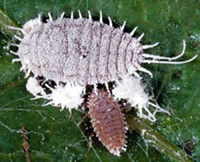
This does not mean that Oregon grapegrowers are off the hook, however. Vaughn Walton, horticultural entomologist at OSU, said that these other mealybug species may also transmit grapevine leafroll virus which inhibits ripening and affects yield when left unchecked in vineyards.
"Other species have not been known to be as invasive as vine mealybug (VMB)," Walton told Wines & Vines. "That doesn't mean these other species are not important, or that they can't also transmit viruses. I've heard reports of other vineyards that have not spotted VMB, but still have leafroll virus. There are other species of scale insects with very cryptic lifestyles. Few growers notice them until there is a real problem."
Walton explained that various mealybugs and other scale insects feed underground by preference, and only become apparent when those feeding sites are full and they must move above ground. "I've just gotten samples from other areas in Southern Oregon with unconfirmed cases of grape mealybug," Walton said. "We suspect they are also vectors of leafroll virus."
|
Vaughn Walton, Oregon State University |

Especially in this season, during and just after crush when wineries must deal with mounds of pomace, vigilance and careful handling are essential, Walton said. "We believe that mealybug is spread from place to place by human movement. We are moving them around. We are to blame." He considers pomace disposal a major method of spreading scale insects.
To keep vineyards safe from these insidious pests, Walton urged wineries to be careful with their pomace. "If you want to put it into the vineyard, there are two ways to mitigate the risk. First, you can cover the pomace with plastic sheets, in order to raise the temperature of the material. Second, you can correctly compost the pomace, which will also raise the temperature and kill the majority of the insects." In essence, the pests are cooked through rising temperatures, sanitizing the grape waste sufficiently for agricultural recycling.
OSU, the Oregon Wine Board and Southern Oregon University have partnered to test 28 vineyards in Southern Oregon for mealybugs this year, and may expand to statewide monitoring in 2009.