Hong Kong commerce minister offers opportunities for B.C. companies even with Chinese slowdown


Wine and environmental technologies cited as opportunities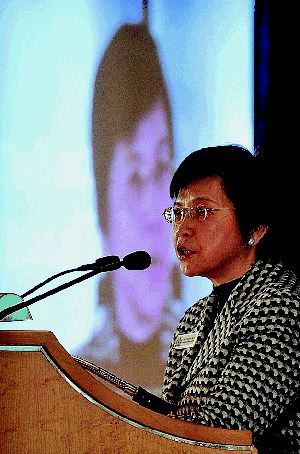 Rita Lau, Hong Kong's top secretary for commerce, brought a simple message to Vancouver Tuesday: "We want to turn crisis into opportunity and believe there are opportunities for Canadian companies to use Hong Kong as a platform into the China market."
Unfortunately, this usual spiel comes not only as the global economy falters, but also as a slowdown dramatically hits the formerly ever-booming China prize.
Reduced exports have stalled production and shut many factories, and falling stock and property markets have dented domestic consumption.
This has the Hong Kong government focused on helping its many small and medium-sized companies survive, said Lau, secretary for commerce and economic development.
"Every enterprise is facing a need for additional cash flow to help them tie over immediate hardship," she said.
Government measures include a time-limited scheme to "provide $1.5 billion Cdn in liquidity to the commercial lending markets for small-medium enterprises."
In addition, Lau said Hong Kong plans to "expedite many major infrastructure projects."
As pundits analyse what may or may not come out of Beijing's announcement two weeks ago of a $586-billion stimulus package to bolster its economy, Lau said that, within the next two years, the Hong Kong government will start construction of a new cruise-ship terminal as well as various road and rail projects that link Hong Kong to cities in southern China.
"Beijing is determined about promoting and managing growth quickly. And Hong Kong will certainly benefit from this," Lau said.
Lau tailored her comments for a Vancouver Board of Trade business lunch where, she said, many listeners were already familiar with Hong Kong as "a preferred base for international companies in Asia: Our low taxes, the rule of law, access to information." She added insights on two areas of opportunity for B.C. companies: Wine and environmental technologies.
"The value of wine imported into Asia, excluding Japan, is expected to reach up to $1.5 billion US by 2017, with China being the biggest importer," said Lau.
To help international companies tap into this growing market, "we have reduced our wine duty from 40 per cent to zero earlier this year," making Hong Kong the first free wine port among the major Asian economies.
She cited Hong Kong's cooperation with the neighboring Chinese province of Guangdong to promote emission reduction.
"There are many Hong Kong-owned factories in the Pearl River delta region," Lau said.
"To help them adopt cleaner production technologies and practices, we have launched a $15 million Cdn [fund]. . . . Companies and service providers in Canada that can offer green technologies and management practices should be interested."