Aussie wine producers see red in Canada: Critchley


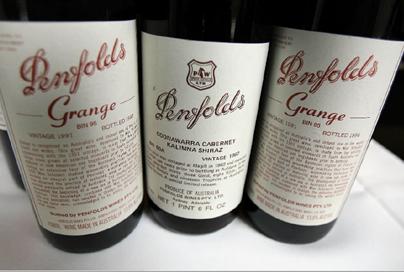
AFP Photo/Greg WoodAustralian winemakers are critical of the role played by the various provincial liquor control boards in Canada.
Yarra Valley, Australia -- How can you live in a country where the government tells you what you can drink?
That comment was made by a number of Australian winemakers who while being anxious to export to Canada are critical of the role played by the various provincial liquor control boards. "It's a monopoly and they protect their monopoly status," said one producer who has dealt with most of provincial boards and is amazed at how consumers tolerate such a system.
"It is quite restrictive. A lot of people make decisions before the wine gets to the consumer," said one producer, noting the system, especially as it applies to the specialty stores, means it is hard to build brand loyalty. "We would like to have more control over the marketing and branding of our wines," added this producer who along with others from the region export their wine to countries in Asia and Europe without such difficulty.
And once they get their wines listed, the producers don't like the practice whereby the liquor boards discount the price of a wine that is not selling as fast as they think it should - and pass the "savings" onto the producers. "It's a no win situation. They make all the decisions and if they are wrong, you pay," said one, adding there is a lengthy process involved even to bring wines in as samples.
The producers in question come from a few of the two dozen wine regions of Victoria, a state that's home to more than 800 wineries. (There are more than 2500 in the country.) Victoria is home to both dry and cool climate wines. The Yarra Valley, about 60 kilometres east of Melbourne, produces cool climate wines. It is a region known for its boutique producers which means the wines are more expensive than those produced by the large industry players. Australia's four largest wine producers'products are all well represented and marketed in the liquor stores.
Indeed, the boutique producers admit they are fighting the perception of Australian wine that it is either "cheap and cheerful" or "sunshine in a bottle."
Noted one: "The Australian wine industry has done really well out of the big commercial producers. But those wine sales are getting soft as people move to more interesting and complex wines" - all part of a plan by Wine Australia to focus on so-called regional heroes.
Given the problems, the boutique wineries use other approaches to get their wine into Canada. The use of wine agents who can work the restaurant chain is one path. Typically, the wine arrives on consignment, be stored at a warehouse and drawn down as sales are made. But some liquor boards are now tweaking that system to ensure the wine doesn't remain unsold for too long. The main tweak: A storage fee that increases over time.
Numbers released by the Australian Wine and Brandy Corp. show the year ended Sept. 30 haven't been good for Australian wines: exports, as measured in litres, were down by 13.3% with the value per litre being down by 1.7% - a 14.7% drop in value. Total exports were A$2.573 billion. For Canada, the comparative numbers were: 11.7% (volume); 1.1% (value per litre) and 12.7% (value.) Total exports to Canada were A$247.0 million The numbers show Canada is the third most important buyer of Australian wine after the U.K. ($845.7 million) and the U.S. (A$716.7 million.)
If there's one consolation to the Aussie wine producers, their concerns are shared by winemakers from many other countries.