Exporting to India Just Got Cheaper


World Trade Organization decides in favor of U.S. shippers
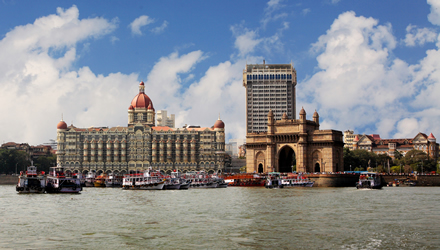
With a population exceeding 1.1 billion, and an increasingly affluent society, reduced tariffs for U.S. wines make India a tempting target for would-be exporters.
Geneva, Switzerland -- U.S. wines exported to India will enjoy lower duties in the wake of a World Trade Organization (WTO) decision striking down India's imposition of additional duties on wine, spirits and other agricultural products.
The additional duties charged on wines and spirits amounted to upwards of 550%. India claimed that these aimed to offset the domestic value-added tax and other levies, but the United States claimed the additional duties contravened India's commitment under the 1994 General Agreement on Tariffs and Trade (GATT) to hold tariffs on wines and spirits to no more than 150%.
Complaints regarding the use of the duties were widespread among several of the world's leading wine exporters. Europe requested consultations regarding the tariffs in November 2006. The U.S. was excluded from that process but American trade representatives initiated a challenge of their own in June 2007, leading to a separate consultation process. (Consultations are a stage before the launch of formal dispute proceedings under WTO rules.)
When the U.S. consultation process launched in 2007, U.S. Trade Representative Susan Schwab argued that the additional duties were inhibiting U.S. wine exports to India, which enjoyed significant growth between 2000 and 2005. "With its fast-growing middle class, India could be an important export market for American wines and distilled spirits if not for these layers of duties," Schwab said. India's population was estimated to exceed 1.1 billion in 2007.
A statement from the office of the U.S. Trade Representative at the time noted that in cases where India accepted imports of wine and distilled spirits duty-free, under special arrangements for airport duty-free shops and use at luxury hotels, U.S. exports of the products increased significantly--by 350% for wines and 200% for distilled spirits in the five-year period between 2000 and 2005.
However, high tariffs imposed on American wines and spirits overall had conspired to keep total exports to India low. Moreover, the U.S. claimed that the additional duties subjected wines and distilled spirits to internal duties in excess of those applied to India's own domestic products.
The consultation process concluded in June 2008, when the WTO panel overseeing the process circulated a report that concluded the U.S. had failed to establish that India was acting in contravention of its WTO obligations by applying the duties. An appeal of the decision the following month led to the Oct. 30 ruling in favor of the U.S.
"This is an important decision for all WTO members, particularly at a time when they are negotiating tariff commitments," Schwab said on release of the appeal decision. "The appellate body reversed a deeply flawed panel report and reaffirmed a fundamental WTO rule that members cannot impose duties on imports that exceed their tariff commitments."
U.S. wine producers exported $951 million worth of wine in 2007, 95% of which came from California wineries. In 2007, an estimated $1.6 million worth of U.S. wine was exported to India, approximately double the figure for 2003. According to the U.S. International Trade Administration, India was Asia's 10th largest importer of U.S. wines last year.