Secrets of a Chinese kitchen: Preparing to celebrate the new year


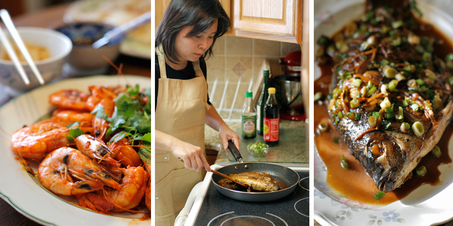
Lee and Mike Tarn prepare shrimp and tilapia with the heads still attached in their Portage home.
The shrimp is a mass of tangled, gray shelled bodies, long antennae and black eyes the size of peppercorns. Mike Tarn looks down at the sight and chuckles.
"Maybe we should cut out the eyes. It won't be so scary," he says. "My son doesn't like to see the eyes," he says about 10-year-old Michael.
On this Tuesday, when blustery winter winds beat against the Portage home of Mike and Lee Tarn, the fragrant aroma of sizzling seafood and soy sauce wafts through their warm kitchen.
The Tarns have opened their home to demonstrate how to cook two of the dishes they will prepare when they, their three children -- Charity, 18, Christina, 15 and Michael -- and other relatives celebrate Chinese New Year's Day on Jan. 26.
They know fish and shrimp with heads and tails intact repulse many Americans. But they also know the foods, when prepared right, can be incredibly delicious, addictive and easy to get used to. And they also wish to share their foods and customs with neighbors and others.
Stir Fry Shrimp
Lee, a homemaker, does the cooking in the couple's sun-lit, pastel kitchen as Mike, former president of the Chinese Association of Greater Kalamazoo, looks on.
Lee Tarn heats a non-stick skillet on high, puts her palm close to the bottom of the pan to judge the warmth, waits a second longer, then adds about two tablespoons of freshly chopped garlic. When the sizzling garlic turns a golden brown, she dumps a bowl of shrimp that has been marinating in rice cooking wine.
Mike Tarn, home from work as assistant professor of business information systems at Western Michigan University, helps his wife explain the symbolism of eating whole shrimp and fish in Chinese culture.
"The whole fish, from the head to the tail, is like from the very beginning to the very end, like you will finish everything from the beginning to the end in the new year," he says. "The word for fish in Chinese also means surplus. When people eat it for the new year, they don't finish everything. That's part of tradition."
Shrimp and fish also taste better when prepared with heads, shells and scales intact, partly because vital juices remain inside the seafood, he says.
The shrimp quickly turns a reddish gold, much darker than the usual pink of commonly cooked shrimp. Lee explains the vibrant color is partly due to the chemical reactions between the wine and juices inside the heads of the shrimp.
"I see it become red, it's ready," she says as she deftly pours the auburn-colored shrimp and their juices on a serving platter. "Among the Chinese, we don't have recipes. We cook everything no recipe, except dessert -- one cup sugar, one cup flour, like that," she says of the Chinese-American home cooks she knows.
She cleans out the skillet, puts it back on the stove and pours a touch of olive oil inside. The oil ripples when it gets hot, and she then nestles a 1 1/4-pound tilapia in the oil. The tilapia has been sitting on the kitchen counter beside the other ingredients of her second dish -- bowls of rock sugar, sliced ginger, green onion and bottles of soy sauce and soy paste.
She braises the fish by first browning it on both sides, adding soy sauce, ginger and sugar, then covering the skillet. She has scored the fish and can tell it is done when its flesh turns white where it has been scored.
She removes the glass lid from the skillet and sprinkles chopped green onions in the sauce that has been created beneath the sizzling fish. She removes the fish from the skillet, places it on a platter, then sprinkles more chopped green onions over it.
"It's nothing fancy," she says as she takes a pair of chopsticks and gingerly pulls tender meat from the fish bones. "You just have to find the right way to do it."