Tweeting about Tempranillo


Wine 2.0 event at Crushpad draws more tech vendors
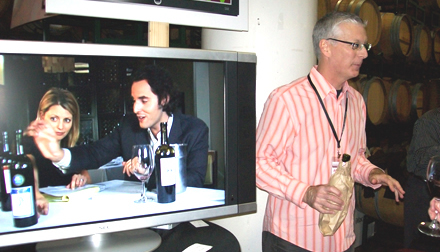
Robert Asher holds an impromptu blind tasting along that mimics the one held on his DrinkThisTV.com show
San Francisco, Calif. -- Wine media executive Robert Asher says he's trying to drag the wine industry kicking and screaming into the 21st century. He was in good company Thursday, when the urban custom crush facility Crushpad hosted Wine 2.0, a gathering to promote the fusion of technology and wine.
Volunteers and winery employees poured samples from about 65 labels, as hundreds of young wine enthusiasts milled about, glancing occasionally at the large screens overhead that broadcast real-time comments about the wines featured at the event.
"Squid ink black and thick and rich," Jennifer C. said of a Petite Sirah.
"Tart citrus, grapefruit, refreshing wine, perfect with BBQ shrimp," Sherman S. commented.
In another area, Crushpad roped off a space for bloggers to sit and record their impressions of the event.
Doug Levy, a California-based editor and writer attending the Wine 2.0 event, said his introduction to the world of Twitter and wine blogging came quickly and with force. Levy started Twittering in February and decided he would send out Tweets from the Academy Awards happening nearby. His focus, he said, was to be food and wine.
"That night I went from having no followers to 50," he said, adding that he's been amazed by the sophistication of the wine blogging community. (He writes his own wine and food blog at wineandfoodworld.com.)
Reaching the market
Representatives from companies such as web design firm Vin/65 and video marketing group Artisan Media had the chance to connect with winery owners at the event. And other consumer-focused technology firms promoted social networking, archiving and wine review sites to the flocks of wine drinkers in attendance.
Asher stood in front of a large flat-screen television that played a snippet from his newest venture, DrinkThisTV.com. The show, which is streamed through the website in segments of about eight minutes, features Amy Christine, director of California sales for Veritas Imports, and Eduardo Porto Carreiro, wine director and sommelier at Los Angeles-based GRACE restaurant.
The duo conducts blind tastings in an effort to give consumers credible advice in a fun and entertaining way. As the clip played behind him, Asher gave guests his own blind tasting, taking many passersby by surprise when he revealed that the red wine they enjoyed so much was a $7.99 Merlot from Washington-based Columbia Crest.
"A lot of wine content is boring and pretentious," Asher said. Tasting blind "overcomes that subtle prejudice."
Another firm, Ning, allows users to create their own social networking sites. The group powers the social network for Wine 2.0, allowing users to upload their own photos and see who is attending before leaving home. Donati Family Vineyard of Paicines, Calif., uses the site to operate Wine Space (winespace.donatifamilyvineyard.com), its online community, which adheres to the same design aesthetic as its homepage.

Lisa Mattson, director of communications and public relations for Wilson Daniels, chats about the TokBox discussion taking place with Grant Burge and Olivia Barrie at Grant Burge Wines in Australia.
Across the way, Lisa Mattson of Wilson Daniels held a live video chat with Australian winemaker Grant Burge of Grant Burge Wines and marketing manager Olivia Barrie. Attendees who passed by the Wilson Daniels table had the opportunity to talk to Burge and ask questions about the wines and winemaking.
Mattson said Wilson Daniels recently began holding intercontinental videoconferences in lieu of bringing executives from Australia to the U.S. to attend a meeting that only takes a few hours. She also hopes to increase the number of online winery films in the near future, when fewer people may have the money to spend on a trip to wine country, but may still be curious to know the stories and surroundings of their favorite vineyards and wineries.
"We are such slow adopters when it comes to technology" Mattson said of the wine industry, adding that she thinks it might be rooted in the fact that vines take three to five years to bear fruit, and a red wine can spend two or three years aging. "Wine has such a long history, maybe people are scared of things that are too high-tech."