PD EDITORIAL: Salmon kill


It shouldn't be this hard to save fish as well as crops
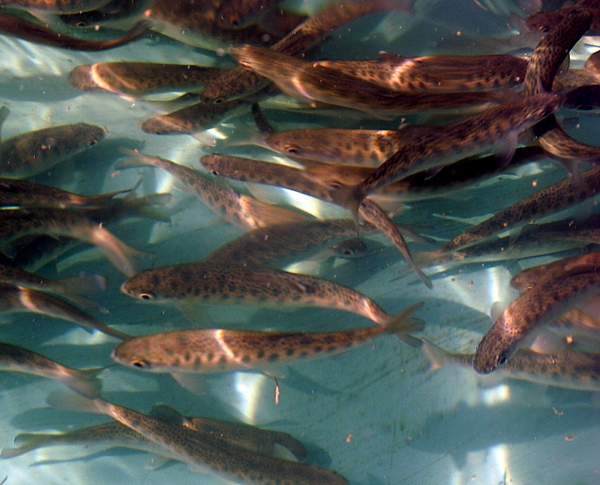
JEFF KAN LEE / The Press Democrat Coho fingerlings raised at the Don Clausen Hatchery at Warm Springs Dam are released into the Russian River.
From watering lawns and recreational fishing to planting grapes and cutting trees, it’s hard to think of an aspect of North Coast life that’s not affected in some way by efforts to restore endangered fish populations.
So how is it possible that so many young Coho salmon migrating toward the Pacific Ocean died along the Russian River last week?
It’s a simple question with a tragically complex answer. But here’s the biggest tragedy: There is no system in place to ensure it won’t happen again.
The fish died due to a sudden drop in the water level of Felta Creek, a tributary near Healdsburg, and the Russian River near Hopland in Mendocino County. The drop was due to farmers pumping out more water at the same time to protect their crops from frost.
The combination of events could — and most likely will — happen again unless state and local regulators come up with a better system for controlling river flows during times of frost risk.
The same thing happened last year, triggering the creation of a multi-agency task force that has been looking at ways to protect fish in the Russian River, and its tributaries, as well as crops. As it happens, that group is slated to meet at 11 a.m. today in Sacramento before the state Water Resources Control Board.
Locals are left to hope this latest fish kill will prompt more action and less talk.
The most immediate need is for improved communication and a better system of gauges so local water officials may increase water flows from Lake Mendocino soon after farmers start pumping due to the possibility of frost. Local water officials also need the flexibility to adjust river flows quickly to meet these changing dynamics.
Unfortunately, the Sonoma County Water Agency does not have a lot of water to work with this year due to below average rainfall. Lake Mendocino is at 62 percent of capacity, and the Water Agency must make sure there’s enough water left for fish later in the summer and early fall.
This underscores another troubling fact — state and local water officials don’t really have a good handle on who is taking water from the Russian River. Some of those straws are not there legally.
Nevertheless, that’s not justification to call for a ban on frost protection all together. Doing so would potentially devastate one important aspect of North Coast life for another.
Farmers have been working with local and state regulators to try to come up with a solution while also developing and encouraging best practices to minimize the impacts on the river of frost protection. Better solutions than outright bans are available.
The only outcome that should be ruled out is one that involves another year of meetings and no plan to make sure fish aren’t left stranded again.