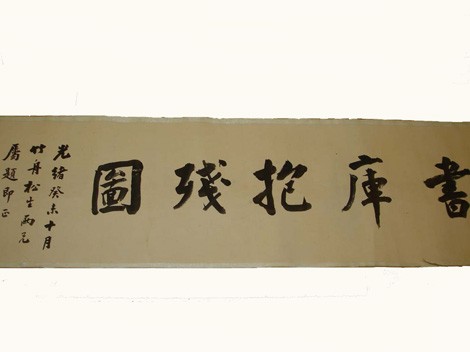
Siku Quanshu(Complete Works of Chinese Classics)


SiKu QuanShu, or Complete Works of Chinese Classics, is the largest collection of books covering all subjects compiled under imperial commission in ancient China. The work comprises four traditional divisions of Chinese learning --classics, history, philosophy, and belles-lettres. Containing 3,503 titles, the book were divided in 79,337 chapters, almost including all books of ancient China, hence the name Complete Works of Chinese Classics.
The compilation began in Emperor Qianlong’s reign of the Qing Dynasty under the commission of the emperor and didn’t complete until ten years later. The seven copies of transcripts were originally housed in seven different locations: Wenyuange in the Imperial Palace in Beijing, Wenshuoge in Shenyang Imperial Palace, Wenyuange in Yuanmingyuan Garden, Wenjinge in Chengde Summer Resort, Wenzongge in Zhenjiang, Wenhuige in Yangzhou and Wenlange in Hangzhou.
But half of these copies were damaged in wars. Currently, the relatively intact editions of Siku Quanshu are the Wenjinge versions kept in National Library of China, Wenyuange versions kept in Gansu Provincial Library, Wenlange versions kept in Zhejiang Library and Wenyuange versions kept in Taiwan.
Siku Quanshu included almost all classical books from ancient times to Emperor Qianlong’s reign, covering all aspects of Chinese history and culture. Moreover, a large number of previously scattered and uncategorized books were systematically collected into the work, playing a key role in preserving Chinese cultural classical books and keeping real historical records.
In addition, many books from The Yongle Canon scattered among the people were included and kept in Siku Quanshu in their original forms, having irreplaceable value in later generations’ understanding of The Yongle Canon.
Siku Quanshu has provided complete materials for scholars of later ages in their research and development of traditional Chinese culture. The work is a precious cultural heritage of the Chinese nation.