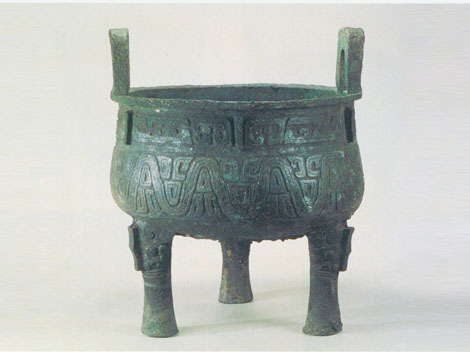
Bronze Ware


The bronze wares were unique national treasures for China in ancient times for their impressive designs, classical decorative ornamentation, and wealth of inscriptions.
The ancient Chinese society fell into the Stone Tool Age and the Iron Tool Age. The earliest stoneware in China was found in 3000 B.C. The Shang and Zhou dynasties ushered China into the height of the Bronze Age. During this period the making of bronze ware reached its zenith. After the Spring and Autumn and Warring States periods China entered the Iron Tool Age.
Bronze is the alloy of copper and zinc or copper and lead that is bluish grey. The museums across China and some important museums outside China, have all collected Chinese bronze ware dating back to the Shang and Zhou dynasties. Some of them are part of the cultural heritage passed down through the generations, but most of them were dug up from underneath the earth.
Ancient Chinese bronze ware fall into three types: ritual vessels, weapons, and miscellaneous objects.
Ritual vessels refer to those objects employed by aristocrats in sacrificial ceremonies or audiences. Therefore there is something distinctively religious and shamanist about them. These vessels include food containers, wine vessels, water pots and musical instruments.
Bronze weapons come in such varieties as knife, sword, spear, halberd, axe, and dagger.
The miscellaneous objects refer to bronze utensils for daily use.
In ancient China the making of bronze ware was dominated by the imperial families and aristocrats. And the possession of such wares was regarded as a status symbol.
In comparison with counterparts in other parts of the world, the Chinese bronze ware stand out for their inscriptions which are regarded as major chapters in the Chinese history of calligraphy.