Shoalhaven Coast


Overview
Wineries extend along the south coast of New South Wales from Kiama in the north to Beagle Bay at its southern end. Most have been established since the early 1970s.
The Big Picture
The principal threat to viticulture on the Shoalhaven Coast resides in the unpredictable but sometimes substantial summer rainfall, a problem that diminishes to the south of the region. It is a situation with which Hunter and north coast wineries are thoroughly familiar and, fortunately, it is far from insuperable. Nonetheless, it seems almost certain that vineyard holdings and winery size will remain small, and that the major vineyard developments of the future will continue to take place on the eastern edge of the Great Divide.
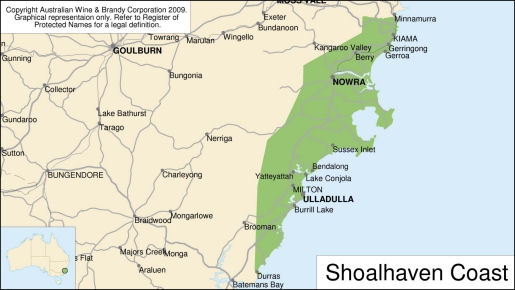
Shoalhaven Coast Wine Region
Climate
Growing season temperatures are quite warm, though extremely high summer temperatures are uncommon due to the strong influence of the Pacific Ocean. The sultry climate, with its high humidity, also diminishes stress on the vines and aids growth but, together with heavy summer rainfall, significantly increases the risk of downy and powdery mildew and Botrytis. Sunshine hours are not particularly generous in the north but improve as one moves south. Frost is seldom, if ever, a problem.
Soil
Selection of well-exposed, well-drained and well-ventilated north-facing slopes is important if the best results are to be obtained. The soil varies in depth and consistency from the alluvial valleys to the hillsides, but most are red and brown earths which are well suited to viticulture and promote good yields.
Wines
Chardonnay: The ubiquitous and ever-flexible Chardonnay is planted up and down the length of the Shoalhaven Coast . It produces a pleasant, mid-weight wine with gentle peachy fruit flavours and a soft finish.
Shiraz and Cabernet Sauvignon: These are paired because they are so often blended and because, either as single varietal wines or as blends, they produce soft, faintly earthy wines without having an especially distinctive varietal character. With appropriate winery techniques, these are fresh, well-balanced, light-to medium-bodied wines best consumed while young. But here too the district can surprise.
Chambourcin: Chambourcin constitutes the majority of the other red plantings. It is grown for precisely the same reasons as it is in the Hastings River region, far to the north; it is highly resistant to mildew and rot and performs well in even the wettest summers. The vibrant colour and fresh plum fruit aroma and flavour of the wine are best enjoyed while it is young; sometimes a touch of new oak is introduced in an endeavour to fill a hole in the mid to back palate structure.
Vital Statistics
| Map Coordinates | 36°40'S |
|---|---|
| Altitude | 10 - 70 m (33-300 feet) |
| Heat degree days, Oct-Apr | 1900 (cut off at 19ºC (66.2 º F) but otherwise not adjusted) |
| Growing season rainfall, Oct-Apr | 324 mm (12.7 inches) |
| Mean January temperature | 22.1°C (71.80°F) |
| Relative humidity, Oct-Apr, 3 pm | Average 60% |
| Harvest | Mid Feb – Mid Mar |