Portuguese Wines Enjoy a Boom in Macao


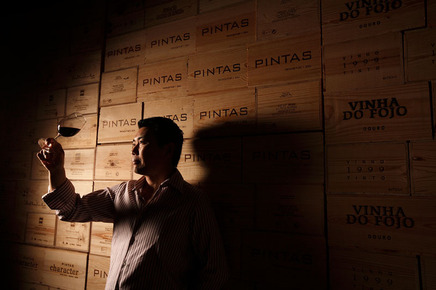
Macau offers a rare opportunity outside of Portugal to experience the rich diversity of Portuguese wine.
Any visitor or newcomer who has pondered a wine list in Macau will know that Portuguese wines are somewhat unfamiliar next to those from Bordeaux, California or Australia. You won’t be able to spot a Merlot, Cabernet, Shiraz or Chardonnay among the lineup from Macau’s former colonial master. Those who do understand the value of Portuguese wines, however, will not be disappointed. Pride and prejudice has kept Portuguese vineyards true to soil, and winemaking true to soul, with more than 90 per cent of wines made there relying exclusively on the country’s 200-plus indigenous grape varieties. This insularity propagates a rich diversity of wines with flavors that are distinctively Portuguese, and rarely imitated elsewhere.
Simon Tam, founder and director of the International Wine Centre, says Portuguese wines are very different in flavor to those grown around the world, making them a great alternative for people who want to try something new.
“Varieties like Cabernet and Shiraz are found in France, Australia, Chile, Italy and Spain, but if you want Touriga Nacional (an important Portuguese grape variety) you have to go to the north of Portugal, and if you want Baga you have to go to Bairrada because it is not found anywhere else in the world,” he explains.
Port wine, a sweet, fortified dessert wine that contains brandy (making it more alcoholic than table wine, is Portugal’s most famous wine export. Its home is in the mountainous Douro River Valley. Until the 1950s, Port was the Douro’s only reputable wine style, with very little attention paid to the production of table wines in the region. Now, however, Douro’s table wines have evolved into some of the world’s finest.
Perfect for producing complex, concentrated reds and Ports, Touriga Nacional is the Douro’s principal grape variety. The grape vines produce very little fruit; those planted in dry, poor soils where temperatures are high are transformed into dark, aromatic wines, with similar characteristics to strong, full-bodied Cabernets.
Other major Douro grape varieties are the powerful, tannin-rich Tinta Roriz (known in Spain as Tempranillo); the feminine and charming Tinta Barocca; the floral variety Touriga Francesca; Tinto Cao which is refined and delicate; and spicy Tinta da Barca. The rolling plains of the Alentejo region in southeast Portugal produce subtler wines that are reminiscent of the landscape in which the grapes are coaxed, coddled and cajoled to maturity. Alentejo reds are usually lighter than their Douro counterparts, displaying ripe fruitiness when young and elegant complexity when mature. The best Alentejo wines have a luscious, velvety richness.
The production of red wine outweighs whites in most of Portugal, except in Vinho Verde. White Vinho Verde (green wine) varieties are crisp, fruity and low in alcohol, and are traditionally drunk soon after the harvest when they are young and fresh. The most prestigious wines produced in Vinho Verde are those made from the Alvarinho grape, which has an intense, fruity aroma like that of Riesling.
Portugal’s other top wine regions are Dao, Estremadura, Beiras, Bairrada, Ribatejo and Terras do Sado, which is renowned for fortified Moscatel wines and Castelao Frances grapes. Portuguese wines are noticeably drier than the fruity varieties most drinkers are used to. Simon Tam warns that people who are not used to the dryness will feel the skin in their mouths tighten and their tongues overproduce saliva to compensate.
Drinking the wine with food will help take the edge off – dark chocolate and a Portuguese red, for instance, make great companions – but the strong flavors are best matched with a meal. Another reason to raise a glass of Portuguese wine is that Macau remains one of the few places where you will find the wine. “Macau is a little bit of Portugal, a precious bit of Europe, in the middle of Asia,” Tam says. “Portuguese food and wine are all part of the experience of staying here.”
People on the hunt for Portuguese wine in Macau will be spoiled for choice at the MGM Grand. The resort’s master wine list pays homage to the city’s rich Portuguese heritage, with roughly one-third of its wines from Portugal. The Macau Wine Museum Shop (Centro de Actividades Turisticas, Rua Luis Gonzaga Gomes) and fine wine specialist The Grape Shop (Rua Direita Carlos Eugenio 81, Taipa) also have good selections for purchase available.
PORTUGUESE WINE
Quality quaffs The universe of Portuguese wines is immense. Destination Macau has done some research to help you select the perfect companion for your next meal
RED
Quinta do Portal Grande Reserva 2000 (MOP 450)
What is it? Only a small quantity of this wine is made using grapes from the Douro region’s best vintages (years). The most prominent grape variety in this wine is Touriga Nacional, Portugal’s noblest grape.
The flavor: Full-bodied, strong and dry, with a silky texture and intense aromas of pepper and spice.
Pair it with: Spicy foods. While the flavor of many wines would be lost when coupled with spicy meals, this wine “fights well” with chilli dishes and curries.
Reserva do Comendador (MOP 430)
What is it? High in tannins, this wine is stronger than typical Alentejo varieties and is part of a small offer made using high-quality Aragonez, Trincadeira and Alicante Bouschet grapes.
The flavor: Aged for 12 years, this wine is calm and not aggressively fruity, complex, soft and easy to drink, with a caramel aroma.
Pair it with: Meat, curries and spicy foods, or chestnuts or pine nuts.
Meandro (2004) (MOP 190)
What is it? An intense and powerful red made using Touriga Nacional grapes from the Douro Superior (outer Douro) region in northern Portugal – one of the best winemaking regions for that variety. Meandro is the second label of Vale Meao, a far grander primary-label wine that sells for about MOP 700.
The flavor: Fruit-driven, dense and silky, and although the wine is powerful, it also has a lot of elegance.
Pair it with: Char-grilled meats or stir-fried beef noodles with black bean sauce.
WHITE
Cartuxa Branco (MOP 200)
What is it? A fruity blend of typical white Alentejo grape varieties, the predominant of which is Antao Vaz.
The flavor: Underlying richness of vanilla and roasted nuts, with a well-disguised 13.5 percent alcohol content that is hidden inside its intense fruit flavor. Yellow straw in color, the first heady notes are honey and a savory mineral character that wine expert Simon Tam calls “steamed burn curd” smell. The palette is medium-bodied but intensely rich, crisp and long-lingering, “Slightly tamer than a cool green apple on a hot summer’s day”, Tam describes.
Pair it with: Antipasto or spaghetti carbonara.
Quinta do Portal (2006) (MOP 98)
What is it? Blend of Gouveio, Moscatel, Malvasia Fina and Viosinho varieties from the Douro. The flavor: Light, fresh, lemon-citrus flavors and tropical fruit aromas mask the wine’s 14 percent alcohol content.
Pair it with: Fish and seafood.
SPARKLING
Vinha D’Ervideira Bruto (2005) (MOP 120)
What is it? Sparkling white wine from the Alentejo region. A great wine to drink at parties and celebrations.
The flavor: Dry. Pair it with: Fish, seafood and desserts (nothing too sweet).
DESSERT
Portal Moscatel Reserva (1996) (MOP 238)
What is it? A dessert wine made using the Moscatel Galego grape variety from the Douro.
The flavor: Fruity, soft, complex and elegant.
Pair it with: Sweet desserts.
D’Oliveiras Madeira (3 years) (MOP 188)
What is it? Dessert wine made up of a blend of Boal, Sercial, Verdelho and Malvasia.
The flavor: Cinnamon, amaretto. Pair it with: Cake and coffee – tiramisu would be perfect.
Ports of call
Famous the world over, Port wine originates from Portugal’s Douro Valley and is available in a range of styles to suit whatever occasion you choose to tipple.
Drunk as an aperitif or a dessert wine, Tawny Port, which is named for its color, is ready to drink as soon as it is bottled. Tawny Ports are blends of wines of different years. Aged Tawny Ports are also blended from different Vintages and are classified into 10, 20, 30 or 40 years; generally, the older the wine the stronger the aromas of dried fruit, wood and roasting and the smoother and richer it tastes.
Vintage Port is a special category of Port wine; it is best drunk straight away before the flavor changes. A celebrated British tradition is to open a bottle of Vintage Port and continue passing it around the table, right to left, without resting it down until the bottle is finished. Vintage Port retains its dark ruby color and fruit flavors and fine Vintage Ports continue to gain complexity for many decades after they are bottled. Vintage Port is made entirely from the grapes of a declared Vintage year, which is only a year in which conditions in the Douro are favorable to the production of a fine and lasting wine. Only exceptional wines receive approval by the Portuguese government to be named a Vintage, making them rare, highly sought-after and expensive. Other varieties of Port wine are Ruby, White, Colheita, Vintage Character, Late Bottled Vintage, Garrefeira, Reserve and Crusted.
Portal Tawny Port (MOP 138)
What is it? Made using Touriga Nacional, Touriga Franca, Tinta Roriz, Tinta Amarela grapes and aged in wooden barrels.
The flavor: Nutty, with undertones of maple syrup.
How to drink: As an aperitif.
Porto Adriano Ramos Pinto Vintage (2000)
What is it? Ramos Pinto is one of the oldest and largest wine producers in Portugal.
The flavor: Jammy red and black fruits mixed with smoke, earth and licorice.
How to drink: As an aperitif.