Edible Exotic Species in China


The communication and spread of edible species and food have lasted throughout Chinese history, which have expanded the food resources, changed the eating habit and enriched the varieties of dishes as well as the daily diet of the Chinese.
Besides the limited edible species introduced to China during the Pre-Qin period, communication and spread of food in a larger scale happened during the rich and powerful Western Han Dynasty (206-25 B.C.) over 2000 years ago. During the time, edible species native to Xinjiang of China or Central and Western Asia such as grape, pomegranate, sesame, horsebean, walnut, cucumber, watermelon, melon, carrot, fennel, celery and coriander were introduced through the Silk Road to the Central Plains where the Han Chinese gathered.
This period was also the beginning of closer communication between China and foreign countries, with many exotic foods gradually placed on our table. For example, corn native to America was introduced to northern China through Europe, Africa and Western Asia; potato, something between staple food and vegetable, came to China through the southeastern coastal cities of China, which was originally planted in Fujian and Zhejiang and later spread to all over the country; the sunflower seeds were brought to China from America in the 17th century and were used in oil manufacture 200 years later, which enriched the varieties of oil plants in China; the mung beans native to India were brought to China in the Northern Song Dynasty (960 - 1127); the spinach was spread from Persia during the reign of Emperor Taizong of Tang (on the throne from 627 to 649), while eggplant from India was introduced along with Buddhism during the Northern and Southern Dynasties (450 - 589); some native Chinese species such as peanut, garlic, balsam pear and pea were also replaced by exotic selection breeds. Most of the fruits introduced in early period were from Western Asia (for example, grape), Central Asia (early apples), the Mediterranean (olive), India (citrus) and Southeast Asia (coconut and banana), while the fruits enjoyed by modern Chinese such as pineapple, tomato, guava, strawberry, apple, durian and grapefruit were introduced from Southeast Asia, America or Oceania in modern times.
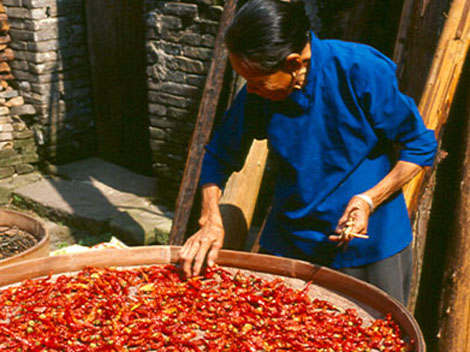
Chili has already become a most common dish and seasoning in China, while the history of chili in China is merely over 300 years. According to historical data, chili was introduced to China through Peru and Mexico by sea during the late Ming Dynasty (1368 - 1644). Sugar is an important sweet taste material among all seasonings, which had not been produced in China until the Tang Dynasty, when Emperor Taizong sent envoy to Central Asia to learn the sugar-making techniques; rare foods such as shark fin and bird's nest was spread from Southeast Asia in the early 14th century, which has become a luxury ever since the Qing Dynasty (1644 - 1911). With the wide prevalence of modern western culture, western-style drinks such as coffee, soda, juice and wines have long become no rarities to the Chinese.