Shenyang Imperial Palace


Built in 1625 AD, otherwise known as "the Shengjing Palace", the Shenyang Imperial Palace was the initial royal palace of the Qing Dynasty established by the Manchu nobles. In 1644, the Qing Dynasty relocated its capital city to Beijing and the Shenyang Imperial Palace underwent renovations and became the emperor's traveling palace on his inspection tours to the northeast. After a number of large-scale renovations, the Shenyang Imperial Palace has been developed into the Shenyang Palace Museum. The two imperial palaces in Beijing and Shenyang jointly form the only two existing intact palace building complexes of the Ming and Qing Dynasties in China.
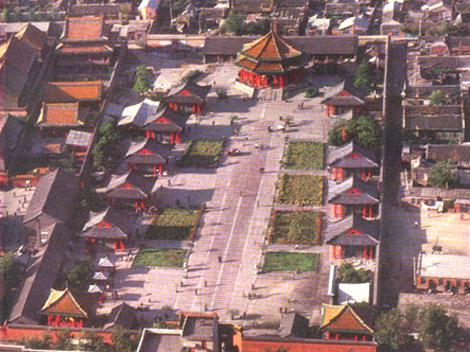
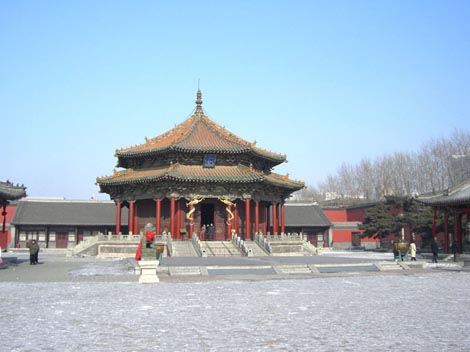
There are only a little more than 100 buildings remained in the Shenyang Imperial Palace, covering a total area of over 60,000 square meters. The centerpiece is the palace of the Huangtaiji Period (1627-1643 AD). It's built with strong Manchu flavor and local architectural style of Northeastern China. The Dazheng Hall was constructed during Emperor Nurhaci's reign. It is a pavilion-style building with an octagonal roof and double-eaves. The hall was mainly used for grand ceremonies like the emperor's enthroning, imperial edict issuing, army expedition declaring and welcoming the return of triumphant troops etc.
The Dazheng Hall and the nearby ten pavilions (known as the Ten King Pavilions) arranged in a splayed shape retain the architectural style of the curtained hall of some ethnic minority groups. The Chongzheng Hall was constructed during the reign of Emperor Taizong of the Qing Dynasty. It's located on the central axis of the front court. Also known as "the Imperial Golden Hall", the Chongzheng Hall is the most important building in the Shenyang Imperial Palace.
The pillars of the hall are round, with a carved dragon joining two pillars. The head of the dragons reaches out of the eaves and the tail extends into the hall, perfectly combining practicality and decorative beauty as well as adding imperial grandeur of the hall. Due to its unique historical and geographic conditions and strong Manchu flavor, the Shenyang Imperial Palace has a totally different style from that of Beijing Imperial Palace.
The Shenyang Imperial Palace is not only famous for being an ancient palace complex, but also for its rich collection of rare items. A large amount of relics from the old imperial court are on display in the palace, including the sword used by Nurhaci.
In July 2004, on the 28th Session of the World Heritage Committee, it was included on the UNESCO World Heritage List as an extension of the Imperial Palaces Sites of the Ming and Qing Dynasties in Bejing.