Chinese splurge on cognac


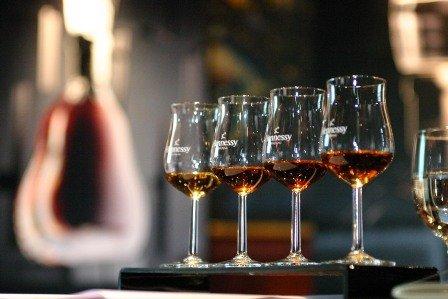
BEIJING - PERNOD Ricard SA's Martell says Chinese buyers cleaned the cognac house out of L'Or at US$3,600 (S$ per bottle, suggesting some of Asia's richest consumers are shrugging off the financial crisis, Bloomberg news reported.
L'Or, French for 'gold', was introduced in China at the end of last year, and some of the blend's brandies date from 1871. It has a hand-worked, gilt-trimmed crystal bottle, as well as a Chinese waiting list for several years' upcoming vintages.
'If you want to be taken seriously in Asia, you really need this kind of product,' Jean-Etienne Gourgues, Pernod's commercial director for cognac and champagne, said last week at Martell's chateau. 'It gives your brand the necessary cachet.'
Distillers are relying on the Chinese as the economy shrinks in the US, where wholesalers are cutting their inventories of spirits and a 1990s hip-hop fad for cognac has withered, said Bloomberg. At rival LVMH Moet Hennessy Louis Vuitton SA, China has surpassed the US as the company's biggest cognac market.
The founder of LVMH's Hennessy, an Irish mercenary granted land by the French king, started distilling his namesake cognac over 240 years ago and won over aristocratic European drinkers, according to the company's website.
Eight generations later, Maurice Hennessy says China overtook the US as the brand's biggest source of revenue and profit in 2008. The family business merged with champagne house Moet & Chandon in 1971, and combined with Louis Vuitton fashions in 1987 to form LVMH, controlled by billionaire Bernard Arnault.
'Asian consumers are extremely status-conscious,' Maurice Hennessy said last week at Chateau Bagnolet, one of his family's estates in Cognac, the southwest France region where the amber- hued brandy is made. 'They demand only the best quality.'
Sales in China will grow faster than 10 percent in 2009, Hennessy said during a lunch at his estate. Asia is more profitable than the US because the region's consumers buy only the aged, more expensive VSOP and XO categories, he said.
Ultra-expensive bottles 'don't contribute significantly to overall earnings, but it's a good, and necessary, investment into the brand's image,' said Joao Valli, an analyst at Sanford C. Bernstein in London. Cognac producers run the risk that a
Chinese slowdown will spread to the richest businessmen, as 'cognac is disproportionately expensive to everything else on the Chinese market,' he said.
LVMH has declined to break out US cognac revenue for 2009. Frank Coleman, a spokesman for the Distilled Spirits Council of the United States, estimates that US cognac sales are down more than 20 percent overall.