Humble Administrator's Garden


As the most famous one of classical gardens in Suzhou and one of the four most famous gardens (the other three being the Summer Palace in Beijing, the Chengde Imperial Mountain Resort in Hebei, and the Geyuan Garden in Yangzhou) in China, the Humble Administrator's Garden is built in the early 16th Century in the Ming Dynasty by a retired officer. The name of the garden, with special meaning in Chinese traditional culture, suggests the retiree's dissatisfaction towards the administration of the government and his longing for simple but natural life.
The Humble Administrator's Garden satisfies with the intellectual and emotional needs of ancient Chinese literati. The garden is laid out in imitation of natural beauties with bridges and pavilions. Artfully designed water courses around artificial hills and pavilions add radiance to the garden.
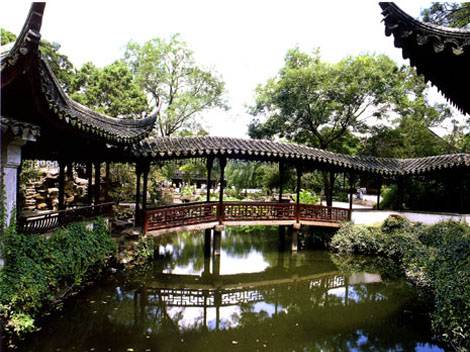
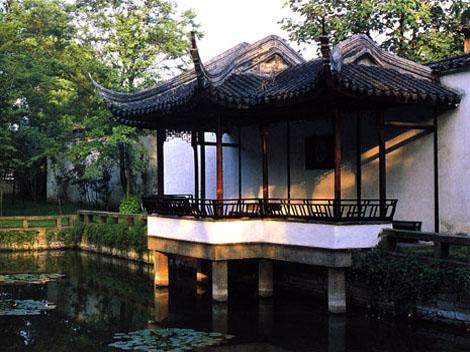
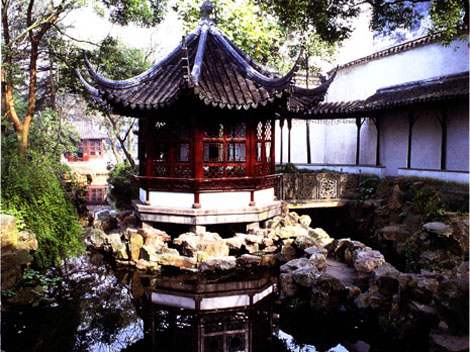
The whole garden covers an area of about 4 ha, three-fifth of which is water area. It is divided into three sections: the East, the Central and the West. The sections, linked by water courses, with their own characteristics and dependent attachment, create a picturesque view of beauty and peaceful harmony. The east section features hills covered with pines and bamboos and encircled by streams. The noteworthy spots in the east include the Furong (Lotus) Waterside Pavilion and the Tianquan (Heaven Spring) Pavilion. The central section stands for the essence of the whole garden, with a great variety of flowers and shrubs planting along hills, waters, and pavilions. The main construction Yuanxiang Room borrows view of pagoda outside the garden with that of lake and other landscapes in the garden, both direct and mirrored in the waters. Other famous spots in the central section include Xiangzhou, a building complex resembling ancient official boat that attracts tourists to take photographs, and the small Flying Rainbow Bridge, an unusual shelter bridge in China's ancient architectures. A moon gate cuts through the central and the west sections. The tranquil and peaceful west section boasts rich water views with a lake at the center, around which are zigzagging corridors and Yuanyang (Mandarin Duck) Pavilion. And some mandarin ducks can be found swimming in the lake.
Since its creation, the garden has undergone many vicissitudes and its owners continually changed. During the Taiping Heavenly Kingdom period it became the residence of Zhongwang (King of Loyalty). After the foundation of the People's Republic of China in 1949 it has been given special consideration and restoration by government at all levels. The three sections are finally taken into a whole again. And Dec 4th, 1997 witnessed its inscription on the World Heritage List by the UNESCO.