Wine review: Screwcaps


They're not all they're cracked up to be, says Victoria Moore
|
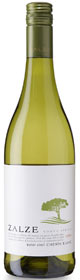
Zalze Chenin Blanc 2008. |
"We generally go for screwcap if it is available," says Tesco buyer Graham Nash. "It's our preferred choice. Initially, the motive was to avoid cork taint. Now it's also about keeping the wine as the wine-maker intended it to taste."
Screwcap propaganda asserts that caps ensure a wine remains "fresh" and "pristine". But this isn't necessarily the case. I'm often disappointed. In tastings, I spot it on smell long before clocking the giveaway thread on the neck of the bottle. The wine doesn't seem as expressive, aromatic, bright and exciting as it ought to be.
"Wine can feel dumbed down," admits Nash, "if the wine-maker hasn't been careful with the sulphur." The problem is a fault known as reduction, because it occurs in the absence of oxygen and involves the formation of a variety of sulphur compounds. If extreme, you can taste and smell the sulphur.
|
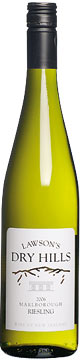
Lawson’s Dry Hills Marlborough Riesling 2006. Photographs: James Johnson |
And not all screwcaps are equal. Some are made with a liner that contains tin (look inside and you'll see the shiny metal). These have a lower oxygen permeability than those, called Saranex 38, that consist of layers of polyethylene, PVDC and expanded polyethylene, and I generally identify more small-scale reduction problems with the tin version.
It's easy to see what's in this for producers and buyers – less development, therefore a longer shelf life for aromatic white wines; also marginal reduction problems are less likely to be identified by ordinary drinkers (if unsure, chuck in some coppers and spot the difference).
That said, two good screwcap whites: Zalze Chenin Blanc 2008, from South Africa (£5.99, Waitrose; 14% abv), and Lawson's Dry Hills Marlborough Riesling 2006, from New Zealand (£9.99, The Colchester Wine Company; 12.5% abv) – tangy and fine, like a harp, despite a touch of reduction.