Champagne grapes will rot as producers protect prices


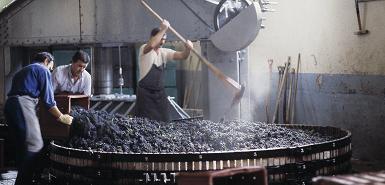
Consumers may have to put hopes of cheap bubbly on ice as growers in the Champagne region look set to harvest fewer grapes to combat oversupply
Hopes of a glut of cheap champagne are set to be dashed when vineyards meet next week to agree on a big cut in production to prop up prices.
With sales falling, producers may be ordered to leave up to half their grapes to wither on the vine in an attempt to squeeze the market.
Merchants are pushing for an historic reduction in yield as they seek to ensure that champagne remains an expensive luxury. “Everyone agrees that production has to be cut because no one here wants to see prices fall,” an industry insider said. “The only disagreement is on the scale of the cut.”
The backdrop to the debate is a slump in sales for champagne makers, from 338 million bottles in 2007 to 322 million last year and a predicted 270 million this year. The fall stems in part from a slide in demand, estimated at about 10 per cent, and in part from destocking by distributors, notably in Britain and the United States.
Related Links
What's the best day for tasting wine?
On the bottle: reader's choice
The result is miles of shelves of unsold champagne in producers’ caves in the Champagne region of northeastern France. They had 1.2 billion bottles in stock this time last year and the figure has almost certainly risen since then.
“Ideally, there should be three years’ production in stock, but we’re now well over four years,” the insider said.
Drinkers looking forward to a price collapse are likely to be disappointed. Famous houses such as Taittinger and LVMH, owner of Moët & Chandon, are determined to avoid what, to them, would be a catastrophe. They are demanding a grape yield of only 7,500kg per hectare when the harvest begins next month for champagne that will come on to the market from 2011. This compares to 13,000kg last year. With this year’s vines producing enough bunches to provide 14,500kg per hectare, the move would in effect involve abandoning almost 50 per cent of Champagne’s grapes.
Ghislain de Montgolfier, chairman of the Union of Champagne Houses, said: “We don’t have any choice other than to adapt to the economic climate.” Jocelyne Dravigny, chairman of the Federation of Champagne Wine Co-operatives, added: “For us, the stabilising of prices is a priority.”
Yet there is fierce controversy over the scale of the drop in yield, with producers calling for 10,400kg per hectare. “That would correspond to a 35 per cent reduction in revenue for vineyards,” Patrick Le Brun, chairman of the General Union of Champagne Wine Makers, said. He accused champagne houses of harming the region’s reputation through excessively pessimistic talk.
“Champagne is the drink of dreams and of parties,” Mr Le Brun wrote in La Champagne Viticole, the trade magazine. “Its image, its universe are endangered when the term ‘crisis’ is associated too often with it.”
Many producers say that they would fail to break even at a yield of 7,500kg per hectare. “I’d be working for nothing,” said one, declining to be named. “We’d be on our knees.”
Under a system similar to Opec’s regulation of oil production, merchants and vineyards will hold a meeting on Wednesday to set the maximum yield. If they fail to agree, the figure will be established by the regional prefect, who represents the French Government. The decision is binding and vineyards that exceed the limit would face legal action.