Cooking on a budget: braised pork ribs


Braising, sometimes referred to as pot roasting, is an economical, unfussy combination-cooking method that takes advantage of less-expensive cuts of meat available in grocery stores. The slow cooking time at low temperatures dissolves collagens and gelatins from otherwise tough cuts of meat, adding richness and body to the braising liquid. The cooking liquid is often turned into a gravy or used as a finishing sauce.
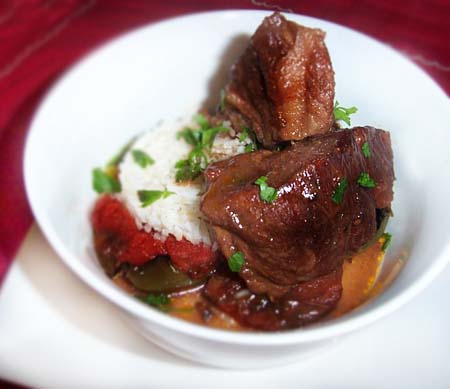
Braised pork ribs and root vegetables with Jasmine rice.
Most braises follow the same basic steps. The food to be braised is first seared over high heat, typically in the same braising pot to be used for the entire recipe. Searing caramelizes the surface of the meat, introducing a complex flavor to the entire dish. A small amount of cooking liquid, that often includes an acidic element, such as tomatoes, beer, or wine, is added to the pot, sometimes with stock or water. The dish is then covered and cooked at a very low simmer on the stovetop or in the oven, until the meat is fork tender; typically 2 - 4 hours.
Popular braising dishes include Coq au Vin, pot roast, beef stew, Swiss steak, chicken cacciatore, goulash, and beef bourguignon, to name a few.
The recipe below uses country style pork ribs, but works well with any cut of meat.
Ingredients:
3 lbs. Country style pork ribs
2 tbs. corn oil
3 cups Chicken broth
2 cups Apricot nectar
1 cup Blackberry preserves
9 Cloves garlic, crushed
2 tsp. Paprika
2 tsp. Dry mustard
2 tsp. Ground ginger
1 tsp. Salt and pepper (or to taste)
Directions:
Cut ribs into 2" pieces. Heat oven to 300 degrees F. Warm chicken broth, nectar, preserves, garlic, paprika, mustard, ginger,salt and pepper in a sauce pan until the preserves have melted and turned to liquid. Set aside.
Season ribs on all sides with salt and pepper. Place a small roasting pan on the stove top and heat on medium until hot to the touch. Add corn oil and heat through until just smoking. Add ribs and brown on all sides. Add chicken broth mixture to the pan and cover the pan with aluminum foil. Place in the oven for 3 hours.
After 3 hours of braising, the ribs should be fork tender and flavorful. Taste the braising liquid for seasoning; add salt and pepper to taste.
The sauce can be served with the ribs on its own, or strained and transferred to a sauce pan and reduced into a thick, caramel-like sauce. Cream can also be added for a decadent finish.