A 'Window' Into the Wine World


hen Kevin Zraly first wrote "Windows on the World Complete Wine Course" 25 years ago, most Americans were drinking beer. Today, the U.S. is second only to Italy in wine consumption.
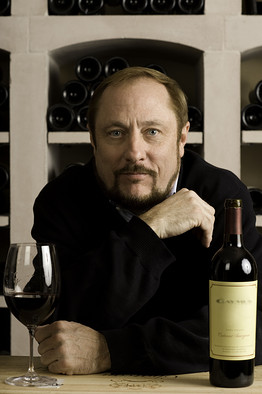
Part of that growth can be credited to Mr. Zraly, 58 years old, who has been teaching courses at his Windows on the World wine school for the past 32 years. He was the wine director for the Windows on the World restaurant atop the World Trade Center from 1976 until it collapsed in 2001. To accompany his classes (they were relocated to Times Square after the restaurant was destroyed), Mr. Zraly published a guidebook, which he updates annually. "Windows on the World Complete Wine Course" has sold more than 3 million copies to date.
For the 25th anniversary edition, Mr. Zraly spent two years visiting more than 100 wine regions and tasting more than 4,000 wines. He has added new countries that he says are now producing quality wines, including Canada, Greece and Hungary. "I don't know who came up with the word 'complete,' " Mr. Zraly says. "The book is a work in progress."
The Wall Street Journal spoke with Mr. Zraly about what's changed in the wine industry, how to select a bottle and the next big grape region -- quite possibly China.
The Wall Street Journal: Why does the book need to be updated every year?
Kevin Zraly: I think with everything that is happening in wine…I can't keep up with it, and if I can't keep up with it, [readers] certainly can't. What I did with this edition, and I started this two years ago, I go and travel around the world. I came back overwhelmed. This is the golden age of wine. Every region I went to was producing really good wine, if not great wine. The bad news is it is very difficult for the consumer. I am sure they are much more overwhelmed than I am.
More on Wine
Read The Wall Street Journal's guide to wine to get tips from columnists Dorothy J. Gaiter and John Brecher on everything from saving money when ordering wine to starting a collection.
WSJ: How has winemaking changed over the past 25 years?
Mr. Zraly: Modern technology, and I think we can thank places like the University of California, Davis and Fresno State for leading the way. I think worldwide there were a lot of grapes grown in the wrong location and wrong soil. What they have done over the last several years is pair a grape variety to a particular site. You are getting better wine and better quality. This stuff was never done 25 years ago.
WSJ: How has the consumer changed?
Mr. Zraly: The way it used to be was just to get people to drink a glass of wine. Then we upgraded them to a Chablis. Then we tried to get them to drink a specific grape. I think we were leading the consumer. The consumer has gotten so much smarter, that they don't need to be led anymore.
WSJ: Is there one hard and fast rule that an overwhelmed consumer should keep in mind when picking a wine?
Mr. Zraly: You don't have to spend a lot of money to have a really good bottle of wine. I would also say [the rule] is to find the right retailer. I would not have said that 25 years ago. [Most retailers] didn't know what they were talking about. Wine is something you have to study. They have become better educated on the subject.
WSJ: What are some new regions making quality wine?

Mr. Zraly: Twenty-five years ago, I didn't have Chile and Argentina in my book. I didn't have South Africa and Australia. The reason was they just weren't important. It was all about old world wines 25 years ago, and if there was anything new, it was California. I put Hungary in the book for the first time. Up until 1989, it was ruled by the Communists. Wine making wasn't a priority. Here we are 20 years later and the wines of Hungary are coming back.
WSJ: What still remains the same?
Mr. Zraly: I would say nothing. The wines of 25 years ago are not the same wines you are having today. There is not a constant in this whole wine market. Grape growing, wine making and distribution have increased for the better, ten-fold. Even in Bordeaux there were bad wines. Today there really isn't a bad vintage because they have ways of controlling them.
WSJ: What's your buying strategy in this current economy?
Mr. Zraly: If I had to pinpoint a place [producing quality bargain wines], I would say South America, in Chile and Argentina. The dollar cost per acre or hectare is so much lower. That's why they can put out a bottle of wine that is $15 that is unbelievable.
WSJ: Any recommendations for can't-go-wrong regions under $25?
Mr. Zraly: I think the old world still has great wines right now. From Italy, the Chianti Classico Riserva. From Spain, a Rioja Crianza or Rioja Reserva. If I go to France, the Rhone Valley. These are spectacular wines under $25.
WSJ: Where is the next big wine region?
Mr. Zraly: That is my biggest dilemma in life. China, but it's not there yet. I don't see it in the near future, which is the next 10 years. Do they have the land? Yes. Do they have manpower? Yes. Do they have the tradition? They are the largest grower of table grapes in the world, but they are not making them into wine. Maybe it's a time that the world of wine is taking a breather.
WSJ: Have you begun work on the 26th edition?
Mr. Zraly: I am doing it. It's a daily thing. When I see something, it goes into a file on my computer, so when I really start to do it, the information is already there.