BizTalk Interview: Brendan Jennings, General Manager, China International Exhibitions


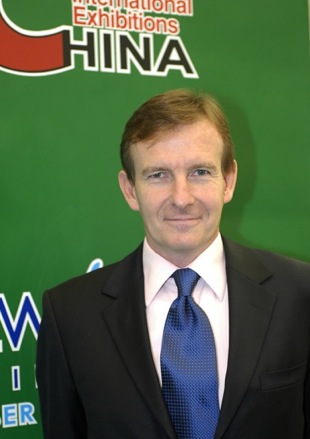
Brendan Jennings is the General Manager of China International
Exhibitions, a member of Allworld Exhibitions, a company he
established in 1993. Today, its calendar of exhibitions includes
many of China抯 most important specialist industry trade fairs -
including the forthcoming Food & Hospitality China
(www.fhcchina.com) expo in Shanghai, from 18-20 November.
2009 has been a tough year for everyone. Is there any sense of
optimism for the fourth quarter in China抯 exhibitions industry?
Exhibitions are a good indicator of the strength of a particular
market. Expenditure for exhibitions comes from a company抯 marketing
budget and this is often first to be axed in a recession.
Fortunately, marketing budgets are also first to be reinstated at
the slightest indication of a recovery. This was evident from the
results of exhibitions in Shanghai from January朖une 2009. All
exhibitions were smaller than in previous years, occupying between
10-50 per cent less space, and all shows attracted fewer visitors.
We ran WoodMac China 2009, for the woodworking technology industry
supplying the furniture manufacturing sector, in February 2009 -
possibly the time at which business confidence in China was at its
lowest. This show shrank from four halls at Shanghai New
International Expo Centre (SNIEC) down to two in a matter of six
weeks. Fortunately, the event is recognised worldwide and the good
numbers attending from outside China in search of Chinese technology
made up for the smaller number of Chinese visitors.
By June 2009, business confidence had picked up and we witnessed a
gradual rise in space bookings. By July, at our ProPak and China
Bevtek, packaging and beverage technology expos, we booked the same
area as in 2008. 揃usiness as usual?was the word coming from the
exhibition floor, with better than expected results for
international companies selling labour saving and energy efficient
technology to Chinese manufacturers keen to find new ways to reduce
cost of production. Now in the final quarter, the indicators for our
Food and Hospitality China expo, the largest imported food and wine
trade show in the country, look very positive. We have sold more
space than ever before, but also experienced more cancellations than
ever. However, with 13 new country pavilions attending, this is a
very encouraging sign of increased interest in the market for the
future.
Shanghai and Guangzhou lead the way in exhibitions space in China.
Will these remain the key locations for major exhibitions, and which
other cities are 憃nes to watch?
Yes, Guangzhou has more available exhibitions space than any city in
China, with a total of 450,000 square metres of exhibition space.
The majority of this is at the massive Pa Zhou expo hall, the venue
of the Guangzhou Fair (formerly Canton Fair), which now takes place
three times per year. Shanghai is currently just behind Beijing,
which has 240,000 sqm. However, Shanghai will increase available
exhibitions space by 76 per cent by the end of 2010, rising from
210,000 sqm to 370,000 sqm. The largest single growth coming from
the completion of the remaining seven halls at SNIEC in Pudong and
new permanent halls at the Shanghai World Expo 2010 site. These
three cities will remain the first choice in China for organisers of
international standard fairs.
China has more exhibitions halls than any other country. There is no
shortage of potential new destinations and there are hundreds of
local exhibitions held in these venues every year. Every city seems
to have an Auto show, several building and real estate shows,
farmers' markets and other events targeting the local domestic
consumer. Picking the right time to enter the second and third-tier
cities with international exhibitions is the question on every
organiser抯 lips - and where do you start? Dalian, Qingdao, Wuhan,
Chongqing and Kunming, amongst, others all have their advantages and
I am sure they will continue to grow as important destinations for
the future. I have been particularly impressed with the development
of Chengdu, which I first visited 10 years ago. I believe this city,
which acts as a natural trade centre for the whole of Southwest
China and many Northwest cities has the venues, airport and
international standard hotels, all of which are necessary first
steps for any future exhibition city.
Beyond the global recession, which industry sectors offer the most
promise for exhibitions growth in China?
Now, if I knew the answer to that I would be busy organising them.
China offers so many opportunities that the challenge is to select
the right opportunity for your business and at the correct time.
Unfortunately, the more opportunities that exist are matched by
increased business failures in this challenging market.
However, one trend in China is very clear: the global recession has
thrown the spotlight on the Chinese domestic market. World
manufacturers from consumer goods to high-end energy and labour
saving technology hope China will help them return from recession.
The much debated, but never realised, domestic market of 1.3 billion
potential consumers has seen many early market entrants fail - for
the simple reason that the real market for imported products is
probably more like 200 million and spread across the whole country,
but concentrated on the coast. Prompted by a combination of the
government stimulus package, decline in world markets and a gradual
increase in consumer spending power, the emerging Chinese middle
class now offers a realistic market not to be ignored by any
industry. If forecasts are realised, the Chinese middle income
consumer is tipped to jump from the current 200 million to over 500
million in the next five years. There are opportunities for every
industry, manufacturing and service and I expect exhibitions will
grow or be created to serve them all.
Food & Hospitality China is now in its 13th year. How would you
assess its growth and diversification in recent years?
The growth of FHC has exactly mirrored the development of the food
and hospitality industry in China. Our first event in Beijing in
1994 was 9,500 sqm - an incredible size for a first show in a new
market. Every food marketing organisation in the world was eager to
find out the reality of the China market. There was much talk of
搈arket potential?and you needed considerable determination to
stick with a market that offered no easy sales. Back then,
supermarkets did not exist in China and imported foods could only be
found in selected star-rated hotels. The majority of our visitors
were from hotels keen to buy imported foods they were otherwise
unable to buy due to strict import regulations.
2007 was the first year that visitors from supermarkets and
retailers exceeded the hospitality sector. This reflected not a
decline in hotels and restaurants, as total visitors to the show
were increasing rapidly, but that retailers had grown to become a
significant aspect of the market, boosted by the emerging Chinese
consumer. At FHC 2008, the retail trade accounted for 37 per cent of
them more than 20,000 visitors, while hospitality accounted for 26
per cent and importers 24 per cent.
With 98 per cent of all exhibitors at FHC China being international
manufacturers or their agents, the focus is on helping foreign
manufacturers sell to China. As only registered importers can obtain
licences to bring products into the country, they are the key
element of this industry. We are proud that FHC attracts the top
importers in China to participate as exhibitors, offering a vital,
on the spot customer base for our many foreign exhibitors.
What new features have been added to this year抯 FHC China show, and
how are you looking to evolve the exhibition further?
This year, FHC runs from 18-20 November, and we have added three new
focused areas to the exhibition: Meat China; Wine & Spirits China;
and Tea and Coffee. Each subject has been identified as offering
particular growth potential for the future and sufficient interest
from both exhibitors and visitors to warrant a separate area within
FHC.
Zoning specialist companies together in one area offers visitors a
convenient one-stop opportunity to locate and compare many similar
products quickly within this large show. Supporting the exhibitor抯
stands, we will also organise competitions, tutorials and products
demonstrations. One event of note will be the China Sommeliers Wine
Challenge, taking place the week before the show with results
announced on the first day of the exhibition. This is a blind
tasting for some 180 wines from around the world by China抯 top
sommeliers and VIP guest sommeliers. Winning wines will receive
Gold, Silver, Bronze and Seal of Approval awards, which provide an
easily identifiable guarantee of quality for the consumer.
In addition, FHC will repeat other focused events that have proved
successful in the past. These include the 11th FHC International
Culinary Arts Competition, where 250 chefs will test their skills
over 13 different categories. Great Chefs of Shanghai Gala Lunch and
the Great Italian Chefs of Shanghai Gala Lunch; Ice Cream Theatre;
Butchery classes, Sommelier tutorials and professional industry
seminars. Our goal is to provide the largest possible range of
products at one show for buyers from the food and beverage industry.
For more information, visit www.fhcchina.com