Yealands - the wild man of wine


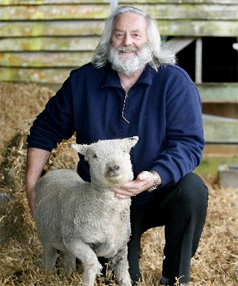
Rich lister Peter Yealands says he has been addicted to work but prizes family and health above all else.
He's not your average vineyard owner, but then his instinctive gambles have have brought better-than average success. TIM CRONSHAW talks to Peter Yealands, the wild man of the winery world.
By Peter Yealands' own admission the guinea pig idea was a fizzer.
The Rich-Lister bought hundreds of the cuddly rodents to keep the grass down between endless rows of grape vines at Yealands Estate.
Sadly, they came to grief at the largest single vineyard in Australasia owned by him and wife Vai when they were picked off by the local hawk population.
Outsiders could be excused for thinking the venture was the wacky indulgence of a wealthy man. It's hard to picture the big wine corporates spending much time on business of this trivia.
Yealands, though, isn't one to waste money on playthings, nor could he ever be accused of being corporate-like.
Undeterred by the setback he replaced them with baby-doll sheep, an early southdown breed. The mini-sheep imported from Australia for $3000 each are too small to damage the vines, naturally harvest the grass and can withstand predators.
By his calculation once they build up to big enough numbers, they will save the vineyard $1.3 million a year in mowing and spraying and provide a meat and wool income.
All of a sudden a seemingly daft idea starts to make good commercial sense.
Yealands has shrewdly worked out the public wants their wine from operations that tread lightly on viticulture soils.
To this extent the bearded entrepreneur with renegade long locks is putting good money into making his 1000-plus hectare property outside of the dozy Marlborough township of Seddon as sustainable as possible.
Nor is he worried about challenging snotty wine norms in the process.
Who else would put a huge vineyard on hillsides or market wine in a plastic bottle?
``I am not your run of the mill winery owner and I had never been into a winery until I bought my own _ it's madness really.'' Sitting in his weathered $5000 Chevrolet truck, Yealands says he is not driven by money, but is a project person.
``I suppose I am lucky. I am an ideas man and and had a bit of money to put the ideas in practise. I had 100 bucks when I got married and got kicked out of school because I was an asshole I have never been one to get to grips with authority.'' Leaving fifth form at 14 Yealands went onto build a sizeable fortune from businesses in the building and aquaculture industries, deer farming and more lately viticulture.
Ad Feedback His true worth was last year estimated at probably a conservative $75 million. This could now err on the generous side, but who would know with the normally candid Yealands giving little away.
Certainly he's streamlining his substantial businesses to put his energies into Yealands Estate, the 1000-plus hectare grape growing venture behind the dozy Marlborough township of Seddon.
``I am worth bugger all,'' he says grinning. ``I might have been worth a bit before the recession, but most things I have owned have dropped in value. Until we sell it's worth whatever it likes. I have never been one to get wrapped up about my value.''
Yealands, 62, has parked on a promontory with stunning coastal views extending to Wellington on a good day. This is rivalled only by the rows of grape vines as far as the eye can see on an undulating landscape.
Here will be the site of his own eco-home one day. Yealands enthuses about timber milled from his own land, solar heating, naturally composting toilets and a grass-lined roof.
He has been bitten by the sustainable bug but before the first foundation is laid he wants to complete what he has started at the vineyard.
Yealands points his truck down to a dam fringed with thousands of newly planted native trees, a site he would like one day to open up to the public during music festivals.
The small lake is among 20 wetlands around the park-like estate and Yealands has lavishly planted many more exotics trees, a hangover from his forestry days.
It took some nerve by him to put down the first grapes on hillsides when every major vineyard was on the flat.
Yealands saw flat land was becoming expensive and in 2002 he bought the first 125ha block of eventually eight properties to be merged into a 1150ha estate with all but 150ha in grapes. He owns another three smaller vineyards on the flats of Wairau Valley and two large stations among other assets.
Lasers to create straight rows in vineyards are of little help on rolling hills so he bought the first super accurate GPS system in New Zealand. Slopes were terraced to allow the advance of hillside grape growing on scale.
Aside from price he liked the way the sun fell at different angles on the hillsides.
Thick skinned and small berries with heavy flavours could be handpicked on the ridges and be harvested earlier than the gullies, offering bigger fruit with thinner skins for lesser wines.
Within eight months the first vineyard was completed and he took up the option of buying more properties.
``That was when demand for sauvignon blanc was insatiable and I sold some savignon blanc grapes for $3800 a tonne. Now it's worth $1200. It was a really rewarding time and vineyards were appreciating at 10 per cent to 20 per cent a year. As I was building up my asset base I was using that to buy additional land.'' The first vintage by winemaker Tamra Washington was in 2005 and she identified 70 distinct ``parcels'' of sauvignon blanc from the diverse terroir. The wine produced by Yealands and his team has since won 140 medals.
On top of the main sauvignon blanc planting the estate includes pinot noir with its first vintage this season, pinot gris, the Austrian white gruner veltliner and a trial block in tempranillo.
Yealands is the only South Island grower of tempranillo, producing its first vintage in 2008, and the innovator in him is excited about the prospects for this Spanish red variety.
``I believe it has the potential to surpass pinot noir in popularity. We will double our production to grow more this winter and it's a fantastic wine. We don't have enough and ultimately I hope to export it.'' While for sale signs dot recession-hit vineyards in Marlborough, Yealands's estate has been in a development phase and is making a profit.
The independent winery doesn't rely on contracted fruit and has an economy of scale beyond other vineyards on a frost-free site. This is despite a carbon-neutral environment at some expense to the operation.
A waning-moon shaped winery is centred in the estate so the grapes are only 10 minutes driving distance from production facilities. This hub saves fuel and machinery wear and minimises downtime and carbon releases.
As a single vineyard the grapes ripen closely together and the entire crop can be harvested in 10 days.Sustainability manager Peter Mann says every component of the complex from fuel consumption to transporting offshore-bound wine has been measured for a carbon footprint of 1320 tonnes this year.
These emissions are being offset by buying credits at $25 a tonne mainly from the wind generation plant at Tararua.
Mann says the team is devising smarter ways to reduce the emissions.
``An energy study showed (growers) consume about an average of 0.45 kilowatts an hour to produce a litre of wine. Yealands produces 0.26 at the moment.'' The winery was built before the green code for buildings was scripted, but houses all of today's accepted requirements for natural light, wool insulation and non volatile paints.
It is fully enclosed with a reflective roof so less energy is needed to keep it cool and fans suck in cooler temperatures at night. Small wind turbines and solar water heating panels contribute to energy savings.
Plans are in place to run vehicles with alcohol extracted from grapes and burning vine prunings to generate hot water for the winery operation will later save $100,000 of gas a year.
Another innovation is the Full Circle brand in plastic bottles. A specially designed plastic provides a shelf life recommended at 18 months and they are one tenth the weight of glass bottles, are recyclable and emit 54 per cent less emissions. Their short life white wines suit the recreational market and have been sold already to New Zealand's Antarctic division.
The 10 baby doll sheep will be joined by another 10 from Australia soon. Half the size of normal breeds, Yealands wants to increase the endangered breed to 10,000 for the 4000km mowing round. His thinking is baby dolls would provided smaller sized lamb cuts sought by the eating public.
In similar fashion a pair of New Zealand falcons have also been introduced to keep pest bird numbers down and the sustainable ethos extends to car pooling and bottles and cartons made from recyclable products.
Yealands draws the line at organic grape growing because the chemical-free treatment requires more sweeps of a vineyard by vehicles for more emissions.
``I started getting a bit greenish in the early 1990s when I bought my farm at Kaiumu and got an affinity with the trees and birds and the animals. Prior to that I was a petrol head as a teenager and had an old Buick straight eight. In my younger days there was no thought of caring for the environment. If we bulldozed a road by the creek there was no awareness of the green thing and it's something that has grown.'' Yealand's unconventional stance and flat-structured family operation has resulted in top people shifting from wine corporates to work for him.
He believes his eco-approach will pay off with wine buyers making their choice on quality, price and the environment Now Yealands the grape convert is committing even more to the wine industry.
``I am putting pretty well all my energy on the viticulture and winery side of the operations and divesting over time my non-core assets. I'm not in a rush to do it because prices aren't particularly strong. The only way to grow this business is to raise capital so we have to sell stuff because we have a lot more expensive work to do and the best way is to tidy your cupboard.'' Among businesses to go on the market will be a 700ha forest on Kaiumu Station near Havelock. Part of the property is being developed into a subdivision with 50 sections already sold although only two homes have been built. He maintains the idea remains sound and when the market improves a marina will be built.
Within five years Yealands Estate will reach maximum production. From 3800 tonnes in the 2008 vintage production will eventually reach 13,000t to 14,000t.
The vineyard exports 90 per cent of its branded wine, Yealands Estate, Peter Yealands or Yealands Way, to 15 countries including Holland, Australia and the United Kingdom.
****
Walking through Seddon's sole supermarket shoppers would never give the self-made millionaire a second glance.
Why would they?
Status symbols mean nothing to him. Not one for social graces, his fashion sense could generously be described as limited and he is more comfortable on a digger than the closed doors of board rooms. Nor does his wild mane fit the manicured looks of the Rich-Lister set.
``I have bought one TV set in my life and I had one given to me. My wardrobe is basic and I still haven't bought a suit and I buy specials. We seldom go on a holiday and a good evening for me is to go to a restaurant with my family. My staff get paid more than me and the home is no different.'' Nor has he ever played a round of golf.
The man who describes himself as a ``basic Kiwi'' has made only a few concessions to this frugal lifestyle. There is a boat for fishing, a workshop for playing in and a Cadillac is still floating around from a trading hobby on the internet which the recession put paid to.
If money doesn't make him tick what shaped him this way?
After Yealands left Marlborough Boys College _ his departure hastened by him refusing to release a magpie smuggled into the classroom _ he ``cracked walnuts and bagged dates'' at the family grocery store.
A year later when the business was sold he went fencing, crutching and shearing, soon learning it was better to use brawn and brains rather than just brawn.
He went hay baling and after a good year bought the biggest bailer available only to encounter two droughts in a row.
With that trademark resilience, he started buying and selling hay in Nelson and the West Coast using a 1939 Chevrolet he converted into a truck and returning home with sacks of coal.
Venturing into construction he built microwave towers, bridges and playgrounds for mainly government bodies and then his family pioneered mussel farming, at one stage owning a quarter of the industry.
Seeing this industry was stagnating he got out 15 years later and in 1989 entered deer farming, leasing land until he bought Kaiuma Station.
Interest waned once his investment nose turned to grapes.
Yealands credits his own success to a good stable upbringing with good ethics _ particularly work ethics _ instilled into him by his father.
He learned from him to never be afraid of borrowing money.
His mentor uncle taught him the customer is always right and to always use people's names, while from his own experiences, he has learned to delegate and to employ people better than himself.
In the end it's is very simple why he doesn't give a toot about the superficial dressings of wealth.
``I have probably missed out on some of the fine things in life because I have been working and probably got a bit addicted (in business) sometimes. The things I value are family, health and happiness _ money can't buy that.''