Cloudy future uncorked for NZ owners


|
Photo: Marlborough Express Cutbacks: Grape growers face slashed incomes as prices drop.
|
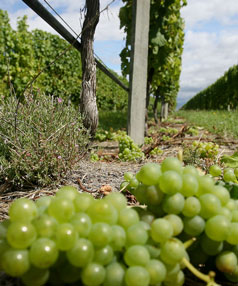
An international glut of wine has forced wine prices down to record lows, with many wines priced at less than half what they were selling for two years ago, and some wineries being forced to quit surplus stock at below cost.
That would be bad enough but, as the industry struggles with drastically reduced revenue, it is about to be dealt a second financial blow.
Low wine prices flow through to low grape prices, which in turn affect the value of the vineyards they come from.
Falling revenues are starting to feed into lower vineyard valuations, which reduce the equity that vineyard owners' have in their business.
The combined effects of a dramatic fall in revenue and reduction in equity could send some players to the wall, particularly if they paid high prices for their land during the boom years, and have high levels of debt.
The issue was highlighted two weeks ago when Delegat's Group, one of the few listed wine industry players in this country, announced that it expected its full-year profit to be be 30-40% lower than last year, as low grape prices produce a "resulting impact on fair values of vineyards".
That immediately sent Delegat's share price sliding from $2.66 before the announcement was made, to trade as low as $1.92 last week. However, the effects on Delegat are likely to have been mitigated by the fact that it does not own all of the vineyards it sources its grapes from. Some of its vineyards are leased, and much of its grape supply is purchased from contract vineyards owned by third parties.
It is the specialist grape producers who are likely to be hardest hit, because their equity is usually tied up in a single asset – a vineyard which is sliding in value.
One such specialist producer is NZX-listed Oyster Bay Marlborough Vineyards. While the company has made no announcements on possible downward revaluations, its chairman, Sandy Maier, is aware of the problem.
"There's no doubt, dramatic movements in price [of grapes and wine] up or down, feed into [vineyard] valuations, that's inevitable," he said.
"But the company and I think the shareholders and the banks understand the long-term nature of this [business], so at the moment nobody is freaking out and nobody is saying the sky is falling... the problems are there to be worked out."
Ad Feedback Recent sales of vineyards in Marlborough give some indication of how far values have fallen.
John Hoare is a viticultural specialist for real estate agency Bayleys and also owns his own Marlborough vineyard, which provides grapes for acclaimed winery Cloudy Bay.
He said prices for sauvignon blanc grapes had fallen from $2000-$2500 a tonne two or three years ago, to around half that, and this had reduced the selling price of developed vineyards from about $250,000 per hectare to about $150,000 per hectare, depending on factors such as location, access to water and the quality of the vines.
Ironically, it was the smaller lifestyle vineyards, often bought by professional people who wanted to live on the vineyard and develop it as a sideline to their main business, which were selling best, because banks were willing to fund such purchasers provided the owners could meet the mortgage repayments from their main (non-vineyard) income. However, working vineyards were proving harder to sell, with potential buyers mainly adopting a wait-and-see attitude.
"You have issues where people don't have any contracts to sell [their grapes] to a wine company. They are impossible to sell because there's no home for the fruit," Hoare said.
He believed this could lead to the large multinational wine companies increasing their land holdings and buying out smaller players while prices were low.
"When these things happen, the big get bigger and the small get out," he said.
Sir George Fistonich, who heads the country's largest family-owned wine company, Villa Maria, also sees that as a possibility.
He estimated that French liquor giant Pernod Ricard, which owns brands such as Montana and Corbans, already controlled about 40% of this country's wine industry and other multinationals, such as Australian brewer Fosters, which owns Matua, and US-based Constellation Brands, which owns Nobilo, Selaks and Kim Crawford, meant the industry was already dominated by overseas players.
"It could lead to more overseas acquisitions and ownership of quite a few vineyards, there's a danger of that happening," he said.
One who has already decided to sell is Martyn Nicholls, who owns the acclaimed Gravitas wine company.
Nicholls has agreed to sell the company to US-based investment fund The St James Company, which is also buying the Waimea Estates winery near Nelson.
"Selling is a long process and I think a lot of people don't realise how hard it is. I worked on it for two years and dealt with 45 investors around the world before concluding a deal," Nicholls said.
He believes the structure of this country's wine industry needs a complete overhaul.
"There's been too much optimism in the industry in New Zealand. A lot of people came into it in the 1980s and 90s and have been throwing money out of a helicopter for years. They have good vineyards and good wineries and great wine, but they aren't making money.
"I think New Zealanders feel that Marlborough sauvignon blanc is God's best gift to the wine world. The reality is there's heaps of extremely good wines from other countries whose cost structures are far better than ours," he said.
However, low grape prices are also creating opportunities for new players to enter the export market.
Three years ago Andrew Bonner, a former manager of Fosters' New Zealand business, and his business partner, Kevin Joyce, spotted an opportunity to start selling wine to the huge Australian liquor chain Dan Murphy's, which is owned by supermarket giant Woolworths.
"We saw where prices were going and we thought we could make a better quality product at a similar price."
The pair buy most of their grapes from contract growers, have them processed in a contract winery and shipped across the Tasman under the Toi Toi label at a price that allows Dan Murphy's to sell it for $9.90 a bottle.