Will Santa Maria Valley AVA Expand?


Winegrape growers ask TTB to add 18,700 acres to their viticulture area
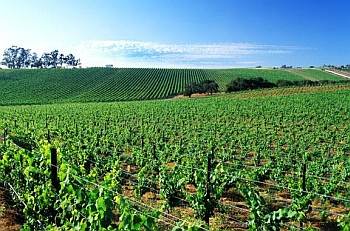
Solomon Hills Vineyard is one of several that are bisected by the current AVA borders.
Santa Maria, Calif. -- After the Alcohol and Tobacco Tax and Trade Bureau (TTB) rejected a 2006 petition to expand the Santa Maria Valley AVA (American Viticulture Area), members of Santa Maria Valley Wine Country rallied their resources and redrew their proposal. This time, the TTB deemed the proposal “merits consideration and public comment,” and posted it on the bureau’s website March 8.
The proposal would add some 18,700 acres in Santa Barbara County to the 97,483-acre Santa Maria Valley AVA, which spans parts of southern San Luis Obispo and northern Santa Barbara counties. (Click here to see a map.) The added acreage currently includes nine vineyards with just 255 acres of commercial vineyards, and another 60 to 200 acres under viticultural development, according to the petition. Santa Maria Valley AVA is the oldest in Santa Barbara County, established in 1981, and drawn up then with more concern for highways and roads than geological or climatic distinctions, according to Jim Fiolek, executive director of Santa Barbara County Vintners.
Why here, why now?
Fiolek told Wines & Vines that the current AVA boundaries bisect some vineyards, and that the redrawn borders make more sense from a viticultural viewpoint. “These lines are drawn with regard for natural drainage, wind, soil, and will make the AVA more uniform for climatic and geologic reasons,” he pointed out. Several grapegrowers and vintners have properties on both sides of the current line, creating obvious difficulties in labeling.
Solomon Hills vineyards, owned by the management of the well-known Bien Nacido Vineyard, is among those divided by an artificial boundary under the existing AVA. Foxen Vineyard and Lucas & Lewellen share the same predicament. “One section, the north side, of our Good Child vineyard is in the current AVA," said Michael Hartmann, director of sales and marketing at Lucas & Lewellen. "Foxen Canyon Road is the AVA’s southern border: It goes right through the middle of the vineyard, leaving 25.5 acres outside."
The current petition excludes additional expansion to the west of Highway 101, rejected by TTB in 2006 because “sufficient justification was not presented.” Sara Schorske of Compliance Services of America, who prepared both versions of the petition, explained that the bureau had asked for more information. “We had to work a lot harder than we thought,” she conceded.
She explained that the proposed new AVA follows the area’s natural watershed, and noted too that there has been “a lot of vineyard development” since the original AVA was approved.” Vineyards within the existing AVA and within the proposed new limits are very similar in elevation, between about 600 and 900 feet, and have similar soils and climate. Schorske said she is optimistic that public comment will support the expansion, which she called “well founded by mutual agreement among the association.” She added, “It’s been a long time coming.”
Fiolek concurred. “This should have happened long ago,” he said. To view and comment on the petition, visit regulations.gov. The public comment period closes May 3.
More TTB news
The TTB will host a series of free one-day seminars for the wine industry in California in April. Bureau experts will explain federal requirements and how to avoid common compliance pitfalls. The schedule includes: Arroyo Grande, April 6; Monterey, April 8; Santa Rosa, April 12 and 13; Napa, April 14 and 15; and Lodi, April 16. Details and online registration at ttb.gov/wine/ca-wine-seminar.shtml.