Wineries May Pay for Budget Shortfall


British Columbia considers increasing wine mark-ups to recoup tax reductions
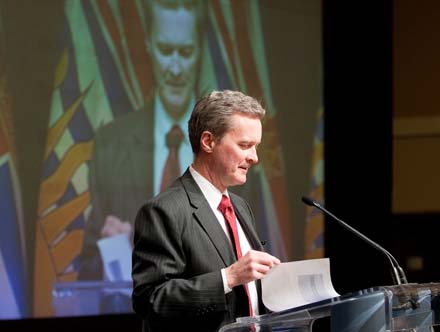
British Columbia finance minister Colin Hansen presents a controversial budget.
Victoria, British Columbia -- Hard on the heels of an outcry in Washington state, the hurdles to entering the neighboring British Columbia market -- issues the Washington Wine Commission hopes to resolve soon -- the province’s cash-strapped government has proposed pricing changes to the mark-up levied on wines sold in the province.
At issue are millions of dollars the government stands to lose through sales taxes when it harmonizes its provincial sales tax with the 5% federal sales tax known as the GST, which applies to all goods and services sold in Canada. Sales taxes on liquor currently amount to 15%, but the new, harmonized sales tax (HST) that takes effect July 1 would reduce the tax rate to 12%. This could have potentially contributed to a slight reduction in shelf prices for alcohol, including wine.
But the budget handed down by the B.C. government yesterday announced that mark-up rates on liquor would be shifted to eliminate any savings, effectively recouping millions in revenue for government coffers amid a CAD$1.7 billion budget deficit.
“The reduction in the provincial tax on liquor, from the PST rate of 10% to the HST rate of 7%, would reduce liquor prices and result in a loss of revenue to the province if mark-ups are not adjusted,” budget documents state. “Therefore, liquor mark-ups are adjusted with the implementation of the HST to generally keep shelf prices constant.” Any move to increase the markup on wine is not likely to impress the Import Vintners and Spirits Association http://ivsa.ca/, a trade association based in Vancouver that has lobbied for a reduction in the province's mark-up on wine.
Attorney Mark Hicken says that proposed mark-ups will unfairly burden some wineries.
Vancouver lawyer and wine industry observer Mark Hicken notes that this could end up impacting foreign wines to a slightly greater degree than domestic wines, because of provisions favoring wines made entirely from B.C. grapes and marketed with the Vintners’ Quality Alliance designation.
“If that 3% tax loss gets moved solely to the mark-ups, then it’s not going to be as uniform as it was before, because not all wine is subject to the mark-ups,” Hicken told Wines & Vines. The province currently mandates a 117% mark-up on wine, but Hicken expects that could increase to 120% or more in order to recoup the lost tax dollars.
“It’s all kind of jiggery-pokery, because theoretically the prices are all supposed to be the same at the end of the day, so the net money going back to the winery should be the same,” Hicken said. “But if they don’t do it evenly, then there will be a bit of a cost for wine.”
A decision on the mark-up rests with the B.C. Liquor Distribution Branch (BCLDB), which operates a network of retail outlets on behalf of government as well as a distribution service serving both government and licensee stores.
Budget woes during the past year have seen liquor in other jurisdictions threatened with mark-ups. California famously backed down from its nickel-a-drink tax proposal last year, while Alberta, B.C.’s eastern neighbor, moved last summer to rescind a markup on liquor prices originally introduced in the spring as part of efforts to fight a CAD$3.9 billion budget deficit.