Christie's Wants to Be China's Auctioneer


Christie's has almost 250 years of history to draw on, but it remains to be seen if that will help the world's top auction house by sales in the fast-growing Chinese market. While China is home to an emerging class with money to spend on art, antiques, wine and more, it remains a complex market for international auction houses, says François Curiel, a Christie's veteran who was dispatched to Hong Kong earlier this year to become president of the firm's Asian operations.
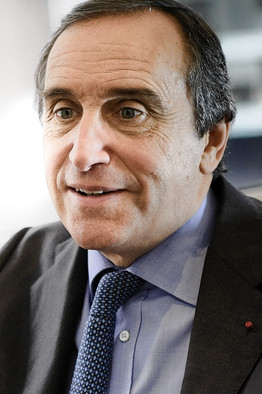
Thomas Lee for The Wall Street Journal
Regulations restrict what foreign auction houses can sell, while a raft of domestic auctioneers have rapidly carved out a large slice of the market. Christie's also found out last year that it's wise to be selective when it comes to selling Chinese artifacts—the firm's sale in France in February 2009 of two bronze heads pilfered from the Summer Palace near Beijing 150 years ago drew a storm of criticism from Chinese commentators. But Mr. Curiel, who previously built Christie's businesses in Paris and New York, is also excited about the potential reflected in a record-busting Hong Kong spring sale for rivals Sotheby's earlier this month, as well as Christie's own $212.5 million autumn auction in November last year. Christie's Hong Kong spring sale starts May 28.
Duncan Mavin talked to Mr. Curiel in Hong Kong. The following interview has been edited.
WSJ: Christie's was founded in 1766 and has been here in Hong Kong since 1986. You've been in the industry four decades. How does the growth of China's auction industry fit into that history?
Mr. Curiel: Of the 20 largest auction houses in the world, 10 are Chinese. In the top 10, five are Chinese. It is absolutely sensational. Companies that haven't been in business 10 years are already in the top auction houses in the world. Some of them 10 years ago I had never heard of. This is probably the biggest challenge of my life at Christie's. It is the biggest challenge the firm is facing: How do we penetrate this market?
WSJ: Christie's knows firsthand that's going to take some cultural sensitivity too, right?
Mr. Curiel: We have to be careful on this particular issue. We are very careful not to sell items we are not supposed to sell. We are ultrasensitive to this issue. I have recently turned down two pieces which were not proper for us to sell in this market.
WSJ: How will you tap the Chinese market?
Mr. Curiel: Part of my job is to make it easier for mainland Chinese buyers to come to us by having more Chinese speakers, more Chinese representatives. I want to help our Chinese clients understand that it can be a dialogue with our experts. It's a long process of education. Also, do we grow organically or do we buy an auction house and develop it? Do we do a joint venture? And how do we deal with the two centers of Beijing and Hong Kong? We had the same question in Paris when we opened there in 2000. Until then, all art sourced in Paris was sent to New York or London. But the answer was there was enough for Paris, London and New York. Same will happen here. The pie becomes bigger.
WSJ: How will the competition in China affect your business?
Mr. Curiel: It's extremely important. There are 400 auction houses in China, and maybe 20 are doing more than $50 million a year and five are doing more than $150 million a year. That's very helpful. In France, the No.3 auction house does about $80 million and No. 4 is $20 million.
WSJ: Are you concerned about a bubble in Chinese art?
Mr. Curiel: I don't think there's a bubble around Chinese art. It might come if those who made a lot of money out of real estate or selling their companies suddenly have less money. That's what I'm worried about. I think we still have a long way to go before the Chinese market slows down.
WSJ: Have there been any major surprises since you moved to Hong Kong?
Mr. Curiel: Not really. I was wondering before coming whether the Chinese were sophisticated and knew exactly what they were buying. I realized quickly they are very shrewd and knew much more than I thought they would. When you are busy building a business, you don't have much time to study works of art. But they have two or three very good advisers and put it together with the auction house experts. In December, we sold a five-carat pink diamond. It went for $2 million a carat. The previous record was $800,000. However, it was the best of its kind. My colleagues had never seen a pink diamond of this quality. So, they pay top prices for something that is unavailable anywhere else.