March Tips and Tricks



(Photo: Pacific and Bay-area fog draws in on Oakville, Napa Valley)
Approaching California (from China)
Over Chinese New Year, we had the chance to re-visit California, the USA’s most famous wine state (around 90% of American wine comes from California).
During our winery visits, we talked with Californian producers about the lack of recognition in China of US wines.
However, several mainland Chinese importers now carry important American wineries (click here to read more) with California leading the way, even if lack of awareness among consumers and the absence of a co-ordinated programme for the reception of US wines in China remain issues.

But what makes California distinctive? Most famous is California’s Napa Valley which more often than not boasts near-perfect growing conditions for high quality grapes.
Cabernet Sauvignon grows especially well in the warmer parts of Napa; although near the southern end of the valley lies Carneros which is cooler and more suitable for Chardonnay and Pinot Noir. The Carneros region is also shared with neighbouring Sonoma, a generally cooler part of the North Coast AVA (American Viticultural Area).
Typically, higher-quality wines come from California’s cooler regions, whether up-high in the Santa Cruz Mountains or along the North, Central and South Coast zones. Producers are free to plant grape varieties wherever they want, but certain areas are, of course, well-known for specific varietals:
Napa Cabernet Sauvignon, Carneros Chardonnay and Pinot Noir, Russian River Valley Pinot Noir, Alexander Valley and Dry Creek Valley Zinfandel (‘the Zin zone’), Paso Robles Syrah etc.
Beyond these special areas, the huge Central Valley produces the bulk of California’s cheapest wine. However, the Central Valley also has some special parts, like Lodi, which is also famous for Zinfandel.
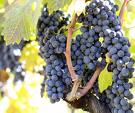
The Zinfandel grape is certainly one of California’s oldest and more unusual varieties. Although it is the same, genetically speaking, as Italy’s Primitivo grape, Zinfandel is morphologically different with plump berries that easily raisin on the vine (the berries are so large initially that they even shade other grapes on the same bunches, which can lead to uneven ripening).
Raisining on the vine typically leads to a particular style of red wine, usually high in alcohol with lots of fruit and tannic structure (when red).
However, Zinfandel is also used to make an affordable rosé wine - sometimes confusingly called White Zinfandel, usually known as Blush Zinfandel - that has brought many American and some international consumers to wine and is a good thing to buy for first-time wine drinkers.
Our advice in buying Californian wines in China? Seek an importer with an interest in US wines specifically, if you want to try premium or mid-range wines (for more information on importer ranges click here).
Californian wines are generally quite expensive around the world and China is no exception (no less influenced by tax and some hefty distributor margins). But at least you will usually find the main grape variety on the label with the area of production also usually clearly marked (these are legal requirements, but rules on labelling are occasionally bended in the PRC!).
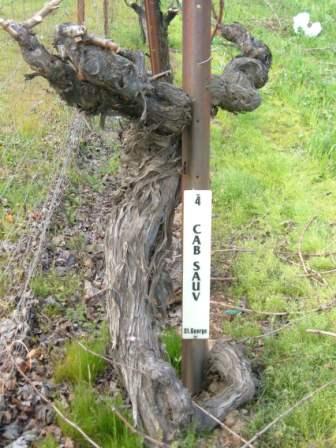
For those who like generally rich-textured and higher-alcohol wines, California remains attractive, but styles are changing and even something as generically coded as so-called ‘Napa Valley Cabernet’ comes in a whole host of producer-inflected expressions.
Thankfully, this range of styles and attention to quality winemaking means that US wines are typically adaptable to many different types of cuisine. Our advice is to keep searching, tasting and bringing such wines to the banquet or indeed any table!