South Australia's struggling grape growers to get just 27c a wine bottle


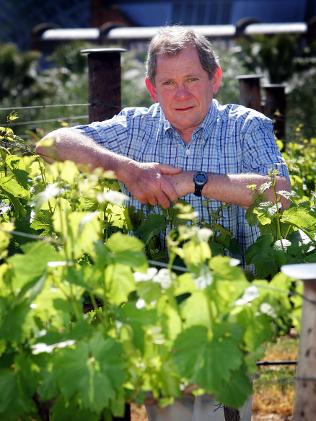
Riverland Wine Grape Growers Association executive director Chris Byrne at the National Wine Centre in Adelaide. Picture: Sarah Reed
STRUGGLING grape growers will receive an average of just 27c for each standard bottle of wine sold this year amid predictions that a horror harvest will push many to the brink of ruin.
But consumers are benefiting from the crisis, with some wines now on sale for less than the cost of a bottle of water.
The revelations come as the state's poorest grape harvest for over two decades draws to a close and initial figures show revenue down more than 75 per cent from the 2002 peak.
Figures obtained by The Advertiser show the Riverland, the engine room of the state's wine industry, earned just $68 million this harvest, down from $255 million in the boom times eight years ago.
The crisis is evidence of the growing strain on the industry as observers forecast the grape harvest to fall to its lowest in years.
Growers groups are calling for more government aid to maximise returns as a global wine glut pushes wine prices to the point where some bottles can now be bought for less than bottled water.
Apart from rock-bottom grape prices, the harvest size is the smallest in a decade with the exception of the drought and frost-decimated crop of 2007.
With the state harvest finishing in the South-East in the next few weeks, estimates indicate the SA crop will fall to 600,000 tonnes or less, compared with a peak of 904,022 tonnes in 2006.
Few growers have made money this year as increasing numbers leave the industry.
Riverland Wine Grape Growers Association executive officer Chris Byrne said consumers will be the winners as the lowest-priced wines sell for less than the price of bottled water.
"The Riverland grape grower was getting 66c from a bottle of wine in 2000, but it has dropped to only 27c a bottle this year," he said.
A new report by the association shows the average price per tonne for Riverland grapes has crashed from $673.81 in 2002 to only $265 this year, lower than the price of grapes 20 years ago.
A similar impact is being felt in wine grape growing regions across the state.
Mr Byrne said it is creating enormous financial pressure for the region and farming families who don't have enough money to spend on living and business expenses. "It doesn't provide for living costs, overhead costs or anything else such as retirement," he said.
The report shows apart from the falling grape price, the region's grape crop has dropped from a peak of 432,789 tonnes in 2005 to just 260,000 tonnes this year, not including about 30,000 tonnes produced by wineries.
Mr Byrne said this year's Riverland crop is down from last year's harvest of 397,853 tonnes when $119 million was paid to growers at an average price of $349.40/t.
"The region's grape income this year is utterly unsustainable with businesses only surviving by liquidating assets," he said. Mr Byrne said at least 4000ha of grapevines had been taken out of production in the Riverland in the past three years.
"If the price we received for grapes this year continues, we could lose that many more hectares again," he said.
Mr Byrne fears even worse may come if the Federal Government introduces a volumetric tax on wine. If the Henry tax review, due for release on Sunday, recommends a volumetric tax on wine, the industry estimates a $12 cask of wine to jump to $37, while the price of high-quality wine above $27 a bottle will drop.
Peak organisations have estimated the industry is producing up to 40 million cases of wine a year more than it is selling with a stockpile of more than 100 million cases.
Mr Byrne said the solution lies in establishing a much better balance between supply and demand by removing vineyards and creating more markets.
"The four peak bodies of the industry have called for the removal of 20 per cent of the nation's vineyards and the Riverland has almost reached that level with the vines it has removed," he said.
The impact of falling income and jobs has been underlined by ABS data showing that the Riverland was the only statistical local area in the state to lose population between 2001 and 2009, dropping from 41,956 to 41,810.