Wine one more sign of India's rapid change


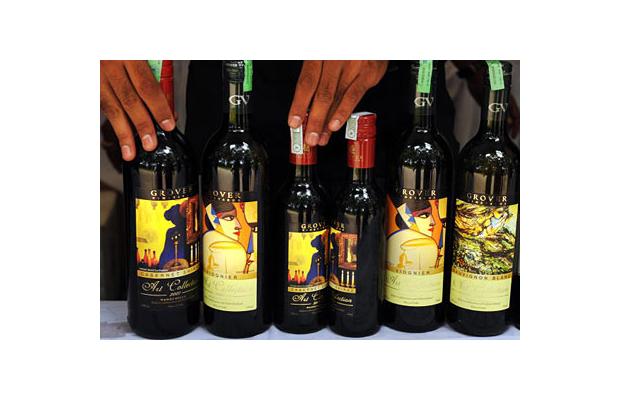
A wine producer employee arranges a display of Indian wine during the final day of the Wine Festival in Bangalore on July 12, 2009. The State Wine Board organized the festival to promote wine cultivation and consumption.
Photograph by: Dibyangshu Sarkar, AFP/Getty Images
In an elegant New Delhi club, Nivedita Singh indulges in a secret vice that she keeps hidden from her parents -- she sips a glass of medium-bodied red wine.
"I dedicate my whole weekends to wine," the 25-year-old Singh says. "It eases my stress, and I enjoy having a classy and interesting hobby."
Singh says she is proud to be one of a growing number of young Indians who have embraced the etiquette and language of wine and who are developing an increasingly subtle palate for a spicy Shiraz or a crisp Sancerre.
"Knowing what you drink and how you drink makes all the difference," she says. "My parents, like many of their generation, do not distinguish between wine, beer and hard liquor. I hope they understand some day."
Singh lives in a large extended family where drinking alcohol is forbidden, but she is among many affluent Indians who see wine-tasting as a badge of sophisticated glamour. "As the medical experts tell us, 'Wine is good for your health if consumed in prescribed quantities,'" she says with a smile. "And that counts for Indian wines too."
Primarily sold in urban centres, the market for Indian wine is about 1.2 million cases a year, and the country also imports 200,000 cases from Europe and a small percentage from Australia and the United States.
India, which is the world's largest whisky market, is a tempting target for both domestic and international wine sellers. "We will easily grow by 30 per cent this year. There will be new players in the market and that means healthy competition," says Kapil Grover, owner of Grover Wines, which cultivates 165 hectares of vineyards in the southwestern state of Karnataka.
Grover inherited the estate from his father and has experimented boldly to improve grape cultivation in the hot, humid climate.
Using foreign technology and consultants, he produces wine that he says is now of international standard.
Last year, two Italian winemakers became the first foreign producers to invest directly in India, seeking to tap into the emerging sector.
Riona Wines, based in the western state of Maharastra, the country's grape-growing centre, signed joint venture agreements with Italian vintners Moncaro and Enzo Mecella. The two Italian companies have taken a 17-per-cent stake each in Riona in exchange for a total investment of $42.5 million this year.
"This is the first time a foreign company is joining hands with an Indian winery to produce and sell wine," said Riona marketing director Hansraj Ahuja, whose company aims to produce and market six varieties of red and white wines for the Indian wine lover.
In the past five years, dozens of wine clubs have appeared in New Delhi, Mumbai and other cities for members to meet to taste and compare different wines.
Smart restaurants, clubs and hotels boast exhaustive collections of imported wine despite the hefty 110-per-cent duty for importers and tax of between 20 and 35 per cent on the drinker's bill.
"We are heading in the right direction. With a little support, the industry can accelerate growth," said Subash Chopra, head of the Indian Wine Academy, which trains hospitality staff how to handle wine.