Ambitions take root in California wine country


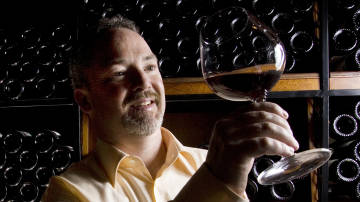
Tony Stewart, president of Quails' Gate Estate Winery, discusses strategy and a Western Canadian perspective
Tony Stewart travelled to California recently, and the president of B.C.'s Quails' Gate Estate Winery had more on his mind than golf. He was on an exploratory visit to the vineyard-rich Napa and Sonoma valleys, where Quails' Gate is looking to buy a winery. Mr. Stewart, 43, comes from a family that has farmed fruit and grown grapes in the Okanagan Valley for 102 years. But he also operates in a global industry where you are only as good as your latest market intelligence. For Quails' Gate, which produces 50,000 cases of wine a year, a California presence is a chance to get bigger – and smarter.
What's the thinking behind this potential purchase?
It is strategic because Quails' Gate has got to a certain size. Having a U.S. operation of similar size means there can be synergies in viticulture [grape cultivation] and oenology team members can move back and forth. It provides the opportunity to gain access to the U.S. market. And we're a partner in a wine distribution agency for Western Canada: It provides a [U.S.] product to go back to them.
Do other Okanagan wineries have sister properties in the U.S.?
We're going into new ground. We've been looking for a long time and market conditions right now are good, with the Canadian dollar up and with some downward pressure in the U.S. economy. It is a good time to make an investment.
Isn't that what more Canadian companies should be doing?
Exactly. Have you read the book Why Mexicans Don't Drink Molson ? I sent a note to the author [Andrea Mandel-Campbell ] saying, “I'm going to challenge you on this one,” but it's in a very tiny way. We want to be the one that no one knows about.
How did you get to this stage in the wine business?
Our grandfather arrived in 1908 and we were fruit tree farmers. We got into wines by default, because of the Canada-U.S. free-trade agreement. It was viewed at the time that the wine industry would go through a phenomenal change and the grape growers were going to be victims. That didn't happen because growers that saw the opportunity started to plant premium grapes. And we shifted in 1989 to start making wine.
As an estate winery, we're now one of the larger ones in the Okanagan. About 85 per cent of our wines are made from grapes we control ourselves. We always felt if we made a quality product, it would resonate with consumers, and if we delivered good value, it would also resonate. Now we're going to try the same thing in another operation and we hope it is a winning formula.
So free trade has been good to you?
In 1988, we had the same amount of land essentially as we do now, and we only employed my brother and one other guy full-time, plus part-time labourers in the vineyard. Today we employ 70 full-time people and we have up to about 100 people part-time in the summer with seasonal work in the restaurant and the wine shop. It's the same piece of land but it's now involved in value-added agriculture, which has huge untapped potential in Canada. We can get into a better mindset around value-added agriculture in some commodities.
What other commodities?
Our background is tree fruit, and the apple industry in the Okanagan struggles to compete against large growing areas elsewhere. But we could focus on quality and value-added products. We could move into a mindset where we would take those products and produce brandies, apple sauce and other things that are good high-end products. That's where the consumer is today.
Do you grow other things besides grapes?
We have one acre left with apples that my dad farms at age 84. It is his little project. The apples are used in the restaurant. We have a garden, too, that grows herbs, tomatoes, chilies, corn and squash.
Does the family have a public service side?
My brother Ben has gone into politics [he is B.C. Minister of Citizen Services]. Ben and I worked together for 16 years, and we have always felt politically motivated. He was the older brother and it made sense that he'd be the one to go into politics.
He didn't get involved because he is interested in what politics brings him – he wanted to bring his skill set to politics. As farmers, we really believe the Okanagan has untapped potential.
How did you personally get into the family business?
My father had a real estate business and for a few years, I ran that. Then as we realized Ben might go into politics, we began to merge the operations and had everything set up under one structure.
We adopted a governance structure that allows a board of directors to run the business. I actually report to a board chaired by an outside director.
There are four families [representing the four Stewart siblings] and each gets to nominate a director, and there are three directors appointed from outside.
Can you make your wine more available in Central Canada?
The problem is we are still quite small, so we can't supply enough that the Liquor Control Board of Ontario would like for a general list. So we kind of fall into the Vintages [LCBO premium outlets] or the consignment program. Vintages orders may be 1,000 cases a year from us but it goes pretty quickly.
Do you run up against interprovincial trade barriers?
We do, but it is more a production issue. The economics of supplying wines in large quantities are somewhat away from us at the moment. There is a lot of demand in Central and Eastern Canada and we would like to be able to offer wine under $20 from Quails' Gate. So it's a matter of figuring out the economics.
What about buying a Niagara winery?
We thought about that, but we wanted to challenge ourselves. It is very easy to become insulated within your own region or your own country. We looked at New Zealand and Australia. I really wanted to see if there was some gain in thinking from another country's perspective.
Just being down here in California, you get the advantage of a more developed and larger industry, where there are a lot of things to learn. We're looking in Napa-Sonoma or possibly other areas. We're in the initial stages and we're looking for a small operation.
So you have to be a global thinker?
You do, or consumer trends pass you by. And in California, they're going through change. They had the dot-com people spending a lot of money on wine and then they had very good times in the real estate industry. Now that's fallen back and people don't want to spend: Forty [dollars] is the new hundred.
You can adjust to that?
Yeah, we come from a different angle. With Canadian wines, you're always fighting to get a dollar more. You get to $15 and then you hear, “Oh, Canadian wines are just outrageously priced!” I went through Napa and there wasn't a tasting room I went into that had a wine under $20.
You're now a director of the Canada West Foundation, the think tank based in Calgary.
We want to have the Western perspective presented in a well-thought-out way. It is not about being a trading bloc or anything like that. Western Canada has specific issues that might not be the same as in the Maritime Provinces.
And energy is the biggest one?
Unfortunately, the media angle is that the energy companies are at the source of all this pollution. The reality is we are all at the source of the pollution every time we start our cars and buy more consumable merchandise. How do you shift the debate to what we can do as citizens to be more sustainable?
Does oil sands development have to slow down?
You have to do things more efficiently with less environmental impact. And usage of oil and gas is the problem. At Quails' Gate, we've been working at reducing our carbon imprint by reducing use. It could be by solar power, more efficient operations in the vineyard, and we're looking at biodiesel. If everybody at the consumer level were forced to cut their energy use by 20 per cent, it probably wouldn't be a hardship.