A French Tradition


What’s more French than champagne? It can only be produced in the Champagne-rdenne region of France and it’s an iconic symbol of France. I took a day trip to this region to tour some champagne houses to learn more about this delicious gourmet product.
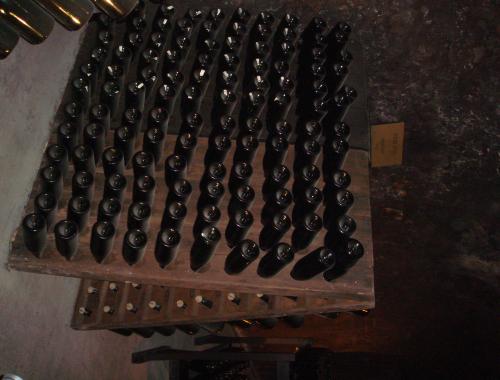
A champagne bottle rack. Photo: Mair Sanato
Champagne first became famous due to its association with the anointment of French kings. Thus, this distinctive sparkling wine from Champagne became synonymous with luxury and power. The beverage’s leading manufacturers, such as G.H. Mumm, put time, energy, and money into advertising and packaging to associate champagne with royalty, wealth, and celebration.
But let me backtrack a bit. When I say champagne is only made in the Champagne-Ardenne region of France you may not believe me. You may argue that you’ve had wonderful California champagne before. However, any champagne produced outside the Champagne region of France, legally cannot be labeled as champagne. That’s why the Italians have prosecco, not champagne, even though the actual products themselves are quite similar or many bottles of “champagne” are labeled as sparkling wine.
In additional to its regional requirements, champagne can only be composed of three different types of grapes: chardonnay, that lends elegance and lightness, pinot muenier, that adds freshness and fruitiness, or pinot noir, that gives depth and intensity. The latter two types of grapes are dark-skinned, red wine grapes. Because of this, champagne makers must be very careful not to rupture the skins, which would ruin the delicate beige color of champagne. However, when making a rosé champagne, these dark grapes’ skin is what lends the faint pink tinge to the champagne. Champagnes can be made with any combination of these three grapes. Champagne made with only chardonnay grapes would be called a blanc de blancs, and if you’re a white wine lover, this would suit your tastes best. If you’re a fan of red wine like me, you’d prefer a blended, or cuvée, champagne. These particular blends all depend on what flavor a certain champagne house is trying to achieve.
Champagne houses strive to maintain their unique flavor year after year. A bottle of Moët and Chandon or Lallement made in 1966 should taste the same as a bottle created in 2006. You’ll never see years on a bottle of champagne (unless it’s a vintage, or a millesimé, as it’s known in French) like you do on wine bottles, because the point is that the flavor of champagne should not change over time, as it does with wine.
But the great champagne houses are dependent on the French villages who produce the grapes. Villages producing champagne grapes are classified according to centuries-old system: grand crus, premier crus, and crus. Only 17 villages earned the status as grand crus, meaning they produce the highest quality grapes to make the best champagne. Thus, grand crus villages are paid the most for their grapes by the larger champagne houses to use in production.
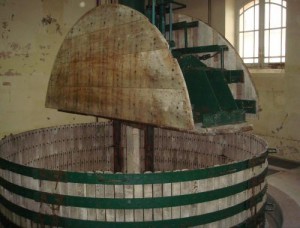
An older model of a pressoir, or a grape press, Photo: Mair Sanato
The process of making champagne is just as specific as the types of grapes used. After harvesting the grapes by hand, they are gently pressed to extract their juices. Then the juice is stored in holding vats and allowed to aerate for 24 hours. The grapes’ juice will be fermented into wine, which is the primaryfermentation process. Next, a secondary fermentation process, known as the malolactic fermentation process, occurs, which is what produces champagne’s famous bubbles. A little yeast and sugar are added to each bottle of champagne; the bottles are sealed, and placed in racks for 15 months, where they are constantly turned to prevent the sediment and yeast from becoming hard. Once they are ready, the yeast is removed.
Finally, the champagne is sweetened a bit, according to the style of champagne. An extra brut, brut, or demi-sec, champagne will have increasing amounts of sugar. Once the desired flavor is achieved, the bottle champagne is ready to leave the champagne house. The bottle is corked and labeled, and voila, just chill, serve, and enjoy!