Multiple personalities


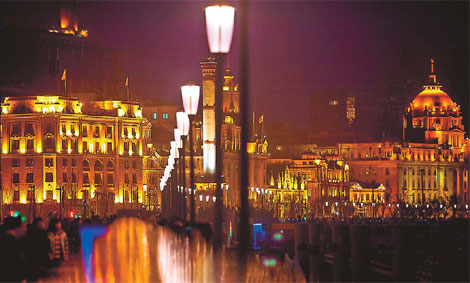
Shanghai's famed Bund at night. The city's most famous tourist
destination comprises dozens of historical buildings lining the
Huangpu River. Jonah M. kessel / China Daily
Five routes through Shanghai tailored to different interests offer visitors insight into the metropolis' myriad identities. Wang Jian reports
Shanghai, host city of the 2010 World Expo, is ready to show the globe what it's made of. Touring this metropolis, which brims with a longstanding heritage of traditional Chinese culture, one can't help but feel bedazzled by the picturesque scenery, refined cuisines and a rich cultural atmosphere.
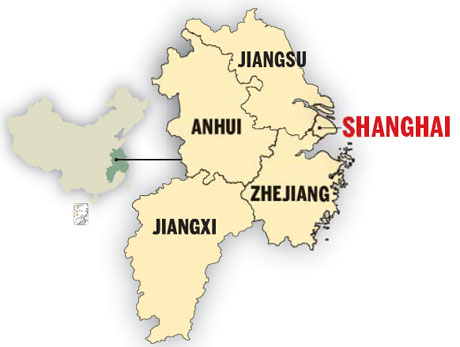
The following five routes, each taking three to four days, are designed for travelers with different interests.
Architecture Tour
Day 1: World Expo pavilions
Day 2: Bugaoli, Xintiandi, Zhou Residence, Former Residence of Soong Ching Ling
Day 3: Cultural Street of Duolun Road, the Old Street, the Bund
Shanghai boasts a treasure trove of buildings featuring various architectural styles.
The shikumen - literally, "stone gate" house, showcases authentic Shanghai culture. Greatly influenced by both foreign and local conceptions, shikumen houses display a fusion of Western style and traditional Chinese terraced buildings. This infusion can be seen in the high and heavy brick walls and in the way the stone arches blend with balconies and courtyards.
Once accommodating nearly 80 percent of the residents, the shikumen houses represent a cozy, neighborly lifestyle that evokes nostalgia for the good old days.
One of the last few shikumen residences in the city, Bugaoli, was built in 1930 by French businessmen. The 78 two-story half-timber houses have preserved the original appearance of old Shanghai. The French called Bugaoli "Cite Bourgogne". "Bourgogne" is still inscribed on some traditional Chinese archways.
The garden house was a popular type of residence among the bourgeoisie in early 20th-century Shanghai. Zhou Residence at No 73 Sinan Road, where late Chinese Premier Zhou Enlai lived, is an elegant specimen of these abodes.
Strolling along the Sinan Road, also known as the "Road of Romance", you can enjoy views of exquisite garden houses. It creates a potent sense of serenity.
Opera Tour
Day 1: Qiandeng Ancient Town, Kunqu Opera Museum in Suzhou, night tour of Shantang Street, in Suzhou of Jiangsu province
Day 2: Memorial Hall of Mei Lanfang, Taoyuan Garden, night tour at Fengchenghe tourist site, in Taizhou city
Day 3: Slender West Lake, He Garden, Yangzhou city
Boasting a 600-year history, Kunqu is one of the oldest forms of Chinese opera.
The ancient town of Qiandeng, which is located between Shanghai and Suzhou, is the birthplace of the musical art form. Walking along the 1-km long stone road dating back to the South Song Dynasty (1127-1279), the views of the old neighborhoods whisk one back to the elegance of ancient China.
The Kunqu Museum of Suzhou is the best place to enjoy the opera at its most authentic. At 2 pm every Sunday, Kunqu performers stage classic Kunqu repertoires in the museum.
After watching the live shows, travelers can visit the actual scenes from the operas. The Chen'an Peach Blossom Garden in Taizhou city is home to the famous Kunqu repertoire Peach Blossom Fan. The garden is a place where visitors can escape into the real worlds that inspired the fictional storylines.
Food Tour
Day 1: Slender West Lake, Ge Garden and Shuangdong Historic Street, food street of Yuxian Road, Yangzhou in Jiangsu province
Day 2: Relic of Tang City, vegetarian lunch at Daming Temple, Jinghua town, "Red Mansion" dinner in Yangzhou
Day 3: Ancient Post Museum of Yuchengyi, lunch at Gaoyou Lake, Donghu Lake, in Gaoyou city
Day 4: Former Residence of Zhou Enlai, Memorial Hall of Zhou Enlai, Memorial Hall of Wu Cheng'en, Laozi Mount Spa, in Huai'an city
Originating in the cities of Yangzhou and Huai'an in Jiangsu province, Huaiyang cuisine is hailed as one of the most popular and prestigious incarnations of Chinese food.
For a taste of authentic Huaiyang delights in Yangzhou, three restaurants are highly recommended: Yechun Teahouse (No. 10 Fengle Street, Tel: 0514-8731-6450); Fuchun Teahouse (No. 35, Deshengqiao, Tel: 0514-8723-3326); Gonghechun (No. 79, Ganquan Road, Tel: 0514-8734-2551).
In Yangzhou, you can feast on a variety of marvelous meals, such as giant "lion's head" meatballs, sliced fatty pork slices, sour vegetable fish pots and Yangzhou fried rice. It's said Yangzhou fried rice has a history dating back to the Sui Dynasty (AD 581-618).
Huai'an visitors shouldn't stop at the memorial hall and former residence of Zhou Enlai. They should also taste some of the specialties native to the late leader's place of residence.
Must-tries include stir-fried eels, pingqiao bean curd and qingong meatballs. Spicy crawfish is a popular dish that is enjoyed around the country, but the freshest and most delicious of the crustaceans can only be found in Huai'an.
Literature Tour
Day 1: Changmen, Shantang Street, Three Kingdoms City, Shuihu City, in Wuxi of Jiangsu province
Day 2: Ganlu Temple, Xijindu Street, Stone City, Jiangning Textile Mansion, Memorial Hall of Cao Xueqin, Confucius Temple, in Nanjing
Day 3: Zhenhuai Building, Former Residence of Wu Cheng'en, Huaguo Mountain, in Huai'an
Day 4: Kongwangshan scenic spot, White Tiger Mountain, Xinghua Duotian scenic spot
The literary tour touches on the "Four Great Classical Novels of Chinese Literature".
These masterpieces - namely, Romance of the Three Kingdoms, Outlaws of the Marsh, Journey to the West and A Dream of the Red Mansions - are celebrated as the most influential works of Chinese fiction.
Known as the "Oriental Hollywood", the Wuxi Movie/TV Production Base contains a large-scale classical construction cluster.
The constructions of the Three Kingdom City and the Shuihu City in the TV Base transport visitors inside the ancient tales. In the Sun Shangxiang Restaurant, diners can enjoy the Three Kingdom Banquet, in which dishes are named after the novel's most famous scenes.
Fans of Journey to the West should pay homage to its author, Wu Cheng'en, at his former residence in Huai'an city. Visitors can see a collection of different versions of the novel from countries around the world.
Ancient Town Tour
Day 1: Fengjing
Day 2: Zhuge village in Lanxi, Zhejiang province
Day 3: Wuyuan, Jiangxi province Day 4: Xidi and Hongcun, Anhui province
Shanghai is flanked by ancient towns characterized by beauty and tranquility.
Fengjing is the most popular settlement of old in the city's suburbs. It has not been over-commercialized and is celebrated for its well-preserved traditional residences and persevering local customs.
Fengjing is also a haven for gourmets. Local specialties include yellow rice wine, tianxiang bean curd and zhuangyuan cakes. Renowned eatery My Home serves many local delicacies and is an ideal place to wine and dine.
Zhuge village is located to the south in Zhejiang province's Lanxi city. It is the birthplace of Zhuge Liang, a legendary politician, thinker and strategist in the Three Kingdoms Period (AD 220-280). It's an ideal spot for traditional culture buffs and offers a peak at ancient China's mysterious side.