Cheating in the wine industry – why does it happen?


During the 18th century, ‘stretching’ or ‘cutting in’ wine was widely practised by Bordeaux wine producers that added wine from Spain or southern France to increase the amount of claret they could fl og to the English. Appellation systems like France’s Appellation d’Origine Contrôlée (AOC) or Spain’s Denominación de Origen (DO) were developed specifi cally to prevent lesser wines being labelled as those from more prestigious appellations, and to stipulate and enforce which grapes or combinations of grapes were permitted.
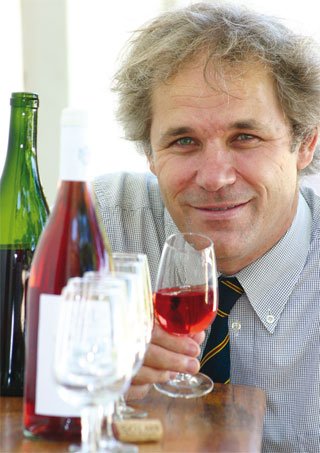
Currently professor in neuropsychology at the University of Cape Town, honorary lecturer in neurosurgery at St Bartholomew’s and the Royal London School of Medicine, and director of the Neuropsychoanalysis Centre of the New York Psychoanalytic Institute, Mark Solms entered the wine industry in 2002 when he took over the running of Solms-Delta in Franschhoek.
But even today there are those who try to buck the system. In 2005, French company Vins Georges Duboeuf was found guilty of blending lesser wines with red Burgundy and selling them at infl ated prices. In March 2008, Italian producers were investigated for cutting their Brunello di Montalcino (100% Sangiovese) with other grape varieties. And in February this year, 12 French wine producers and traders were found guilty of selling 18 million bottles of Pinot Noir (actually cut with cheaper Merlot and Syrah) to US wine giant Gallo for its popular Red Bicyclette label. It seems French fraud agency
officials became suspicious on discovering that wine merchant Ducasse had sold 53 889 hectolitres (hl) of Vin de Pays d’Oc Pinot Noir in 2006 when the entire region had only produced around 53 000hl. A class-action suit has now also been fi led against Gallo, with consumer Mark Zeller claiming that “by labelling, marketing, promoting, distributing, and selling the falsely labelled wine, [the defendants] either knew or, in the exercise of reasonable care, should have known that their conduct was misleading and deceptive”.
THE PSYCHOLOGY OF CHEATING
“Very broadly speaking,” says Solms, “there are two types of cheating. The first is realistic cheating where the person makes a rational, objective assessment of a situation, considers the rules, and decides that the outcome will be better if he fudges or disobeys the rules. This might include someone who thinks a French rule preventing the use of such-and-such a grape variety is idiotic, or that adding water to wine will improve the wine and isn’t harming anyone. The realistic cheat is frustrated by the rules because they seem arbitrary or unnecessary or silly, or because there are too many rules, or perhaps because the rules aren’t policed adequately so everyone else is breaking them and he’s actually at a disadvantage if he doesn’t!”
Then there’s narcissistic cheating, which Solms says is far more malignant. “These people believe they are above the law; that rules are for other people; that breaking rules is okay even if it harms what psychoanalysts term the ‘object’ – in this case consumers or the industry as a whole – because of their sense of superiority. They don’t care about consequences; they don’t even feel guilt. ‘Why should I? The object suffers, I’m okay!’ To use paedophiles as an extreme example, they know that there are things you shouldn’t do to children: ‘But those things don’t apply to me!’ Narcissistic cheats can be very nasty people.”
Solms says there is a maturation element to narcissism. “Little kids cheat – we expect them to – but as we get older, we (should) develop the emotional maturity to put up with life’s frustrations, to accept that we’re good at some things and not so good at others, to tolerate doubt and imperfection. Narcissists lack this emotional maturity; they have a need to be brilliant, the best, or not take part at all. Artists – including painters, sculptors and winemakers – are commonly narcissists. They’re sometimes the most obnoxious people, yet we admire them.”
Solms attributes this ‘funny ambiguity’ to the following: “We all have a latent memory of our early narcissistic selves and of the pain involved in adjusting to our real place in the world – the discovery that we’re not the centre of the universe! So we admire artists precisely because they haven’t relinquished their narcissism; their narcissism is actually their source of greatness.”
At the other end of the scale, residual narcissism also helps to explain the angrymob mentality that takes over when one of our ‘heroes’ doesn’t merely transcend the rules but disregards them. “Suddenly the KWV guys were absolute dogs and people were just about calling for them to be burned at the stake!” recalls Solms.
In conclusion, the academic-turned-businessman wryly observes: “Having come relatively late in life to the world of commerce, I must say it was quite a shock to experience the cut and thrust of sales and marketing; the scheming involved in persuading people that they need to drink your wine; the things people do to gain a competitive advantage. In the mindset of the capitalist order, cheating is actually not that far away from how the system is meant to work!”