How to Drink Tea Like an Expert; It Helps to be Very Calm


Fook Ming Tong tea shop chief Thomas Lee is a native of Hong Kong, but it was in London, as a student in the 1970s, where he first began brewing a love for Chinese tea.
"My mother cut my expenses. With no money I couldn't go to bars and enjoy wine, but tea cost me much less," says Mr. Lee. "In London's Chinatown, the waiters and managers of all the restaurants used to teach me how to drink tea."
Now 60, Mr. Lee's tea empire spans 11 Fook Ming Tong stores in Hong Kong, Shanghai, Hangzhou and Suzhou. He also runs Shiatos Limited, a 35-year-old importer of high-end crystal, porcelain and other luxury goods from Hermès, Lalique and Baccarat into Hong Kong, Taiwan and mainland China.
Mr. Lee recently talked to Duncan Mavin about his love of tea. The following interview has been edited.
WSJ: You first started drinking a lot of tea in London. How did you turn this hobby into a business?
Mr. Lee: Chinese tea in London is not the top quality. When I came back to Hong Kong, I found better quality but still not really the best. In the 1980s, I saw how they sold tea in shops in Taiwan—they let customers taste the tea and did it in a much more friendly way rather than "you buy or you go." I opened my first store in 1987, and when I hired a tea master, I found out I knew nearly nothing about tea. It's so complicated that if I hadn't already leased the shop, I wouldn't have gone into the tea business.
WSJ: What's your own personal favorite tea?
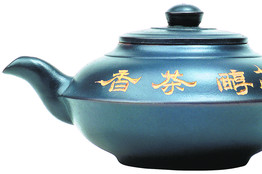 Agence France-Presse
Mr. Lee: Classic Tie Guan Yin—not the modern version. To process Tie Guan Yin is very complicated. You need good spring weather for 30 hours. But in spring it often rains or it's frosty and you don't often get 30 hours good weather. Now farmers are using dehumidifiers and air conditioners, which makes the fragrance stronger than the taste. I built my own factory a few years ago to go back to traditional methods. But even now I still can't produce the tea that I really want, like we were selling 10 or 15 years ago.
WSJ: What should one look for when tasting a tea?
Mr. Lee: It's difficult. For instance, with Long Jing, a green tea, it's a taste of tastelessness. You have to be very calm to taste it. When you're in the concrete jungle, you don't taste it at all. If one cannot calm down oneself, one cannot taste the best tea. For green tea, freshness is the first thing. For Oolong tea, it's the uniqueness. For Pu Er, you have to taste the smoothness.
WSJ: How much tea do you personally get through?
Mr. Lee: A lot. My everyday tea is Tie Guan Yin or Pu Er. Being in the tea trade, it's better to change my tea every now and then; otherwise, you get to used to it and you can't taste properly. I drink about two to three liters of tea a day.
WSJ: If you want to really splash out or impress, what tea should you buy?
Mr. Lee: If it's only about price, the highest price is aged Pu Er. But whether it's worth paying that money if you are not a connoisseur…Well then, good Oolong teas are better.