To impress your guests, save cash on wine and go for a ritzy label


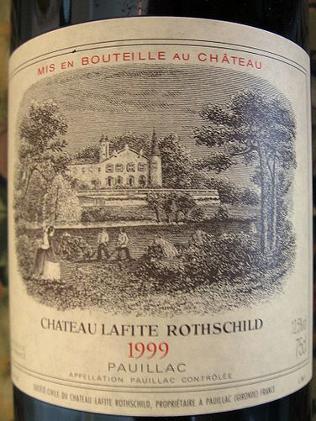
Stick one of these labels on a cleanskin and see if you can persuade your dinner guests they are drinking some of the world's best wine. Picture: Michael Case
FORGET the bouquet, the colour and the aromas. What really matters when it comes to choosing a wine for your dinner party is the label.
Get one from an expensive bottle, stick it on to plonk, don't tell your guests and the chances are they will be enraptured.
That is the implication of US research likely to be seized on by supporters of the theory that snobbery takes precedence over taste for a majority of drinkers.
A study by Coco Krumme, from the Massachusetts Institute of Technology, discovered novices were able to determine the value of wine from the drawings and words on the bottle with a high degree of accuracy.
A second piece of research suggests this is the decisive factor in determining whether drinkers enjoy the drink. If they know that a wine is expensive, they will be happy. If they think it is cheap, they will turn up their noses.
But ask them to differentiate expensive wine from a cheap bottle without seeing the label or knowing the price and they are at a complete loss. Indeed, recent studies indicate that most ordinary consumers tend to prefer the cheaper bottles in blind tastings.
The research has been carried out by members of the American Association of Wine Economists, and suggests smart vintners should spend more time designing labels than pressing grapes.
Ms Krumme asked hundreds of non-connoisseurs to estimate the price range of 300 or so bottles based on their labels.
Seventy-two per cent of the answers were correct. The panel rightly guessed, for instance, that an animal on the label probably signalled a cheap product, while abstract art or landscapes likely came from a prestigious vineyard.
Take Chateau Lafite Rothschild, the celebrated bordeaux that released its 2009 vintage last month at $US689 a bottle. It has a black and white drawing of a harvest scene in front of a chateau on the label. Contrast this with the Australian Little Penguin wines, which cost about $5 a bottle and are adorned by a penguin on a coloured background.
Ms Krumme also looked at wine reviews and found critics invariably used highbrow terms such as "elegant", "intense", "supple", "velvety" and "smoky" for expensive wines and words such as "bright", "light", "fresh" and "pleasing" for cheaper bottles.
A costly wine will claim to evoke chocolate, tobacco or blackberry flavours and suggest it should be drunk with shellfish or pork. A downmarket product will describe itself as fruity and say that it goes with chicken or steak. Thus a consumer who sees a wine claiming to be sophisticated will assume it to be more expensive.
But if the labels speak clearly, the contents do not. In a 2008 study by the American Association of Wine Economists, 506 people blind-tasted wines costing from $US1.65 to $US150.
There was no evidence that the tasters enjoyed the pricier wines more. They broadly said they favoured the cheaper ones.
In another American study, 20 people were each asked to drink three wines, which they were told varied greatly in price. In fact it was all the same product. But the tasters said that they preferred the supposedly costly bottles.
"This means that if you're having a dinner party, you should get a wine with a label that looks expensive," Ms Krumme said. "Your guests will enjoy it more."