Another grape idea to save energy


|
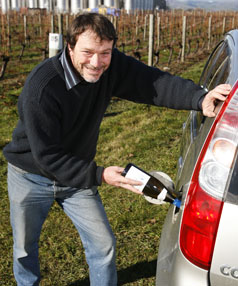
TANKED UP: Ethanol from winery waste could be used to fuel cars, says inventor Kevin Parker, of Vine Gas.Relevant offers
|
Farming Fonterra confirms supply to scandal-hit firm Migrant worker problems cost business OIO in no rush to decide on Crafar bid Apple growers crowing at win Miraka buys $35m milk processing plant Another grape idea to save energy Australia to appeal apple ruling Flying into a storm Rural firm's shares 'offer value' Gripe over lost, skinny stock A Blenheim man's invention takes wineries one step closer to going off-grid.
Kevin Parker, of Blenheim company Vine Gas Ltd, has invented an engine with an inbuilt distillation column which produces and is fuelled by ethanol made from winemaking waste.
Heat from the engine is captured and used to drive the distillation of ethanol from grape-skin pulp. The engine could power a compressor which could be used to drive refrigeration, the biggest energy user in a winery, Mr Parker said.
Surplus ethanol could be used in a fuel mix to power vehicles.
Petrol engines could run on 100 per cent ethanol and diesel engines on 10 per cent ethanol, or up to 75 per cent with modifications.
Mr Parker lodged a patent two weeks ago for his "closed system" of capturing and using energy usually wasted in wineries.
At this stage, the invention is on paper only, but he expects a first prototype to be up and running in a Marlborough winery some time this year.
A beauty of the system was that the ethanol produced was used immediately and didn't need to be stored, Mr Parker said.
He has already designed a vineyard tractor powered by pruned grape canes for the New Zealand Wine Company and a boiler which burns prunings to heat fermentation tanks for Yealands Estate.
"Wineries can be net energy exporters," Mr Parker told the Marlborough Express.
"It's a matter of putting all the pieces of the puzzle together."
Asked whether surplus wine could be used as fuel, Mr Parker said "yes", in a suitably modified car.
But its tank would have to be about eight times the standard size, because alcohol was a less efficient fuel than petrol.
At current prices, filling petrol tanks with wine was a long way off, he said.
Even the most heavily discounted wine was worth far more per litre than petrol and diesel.
"People are not tipping wine down the drain at this stage."
At today's energy prices, alternative systems were not always attractive, he said.
For example, when he designed the Grove Mill tractor, diesel was selling at $1.50 to $1.60, with people saying the next stop would be $2 to $2.50.
Since then, falling diesel prices had made the invention less desirable.
"The higher the energy price, the easier it is to make progress," he said.