The Shanghai Cuisine Wine Challenge


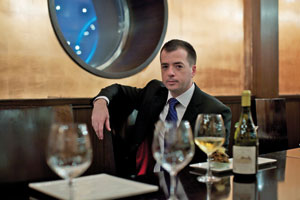
Image by Mick Ryan
The purpose of wine pairing is to complement food with wines. A successful pairing improves the culinary experience by enhancing the flavors of both the dish and the wine. Shanghainese cuisine can be a challenge to pair because of its two common cooking practices: the use of sweet alcohol and the use of sugar, especially when combined with soy sauce in a dish.
When sweet alcohol is present, for example in a dish like sweet and sour spare ribs, the palate experiences an unpleasant bitterness and burning sensation when confronted with the tannic acid found in dry wines. Traditionally, the best pairing is the Chinese HuaDiao (Chinese rice wine) which is sweet, has low amounts of tannin and a high alcohol content. However, in my opinion, this is not an ideal pairing due to the amount of alcohol in the wine. The high level of sweetness can also be overpowering.
A successful pairing of Shanghainese cuisine and other regional Chinese dishes with wines requires a different approach than a pairing with western cuisine, as there are several unique aspects that must be considered in advance. The good news is that because Chinese cuisine is so complex, there is no need to stick to the old rule of the West that matches white meat with white wine and red meat with red wine. You should feel free to match fish and seafood with red wine or match red meat with white wine.
The reason for this basic rule of western wine pairing is that the wine is generally supposed to match the particular dish itself in order to complement the main flavors and/or the main meat. However with Chinese cuisine, you must take a look at all the ingredients in the dish and try to make a decision based on that. Preparation methods must also be considered. Since Chinese cuisine uses a wide variety of flavors and ingredients in a single dish, this is not an easy task to accomplish.
One easy rule to remember: try to avoid pairing wine with any dish which requires dipping into vinegar. Vinegar changes the palate completely and makes it almost impossible to match vinegar with any type of wine. When vinegar mixes with wine on the palate (especially with tannic wines) it creates a very unpleasant sensation.
VERSATILE VOUVRAY
Another idea for a successful pairing with Shanghainese cuisine is to look for Vouvray wines. Vouvray (pronounced Voo-Vrae) is located in France's Loire Valley. It is an AOC (Appellation d'Origine Controlee) region. The wines from Vouvray are my personal favorites because of their versatility of style and value-for-money. Their versatility and considerable residual sugar level (even in the dry versions) make them a very good complement to Shanghainese food.
This entire wine region and its wines are often overlooked on wine lists, and especially in China, as they are not yet that popular. The most important grape variety is Chenin Blanc. Good Vouvray is charming, firm, and delicate, exhibiting a nutty, floral, honeyed character whose rich flavor is balanced by palpable acidity and bracing minerality. Almost every Vouvray gives off a unique quince, apple fragrance which is unmistakable to the nose.
Vouvray comes in five styles:
Sec is the dry variety, though due to its natural floral, honeyed flavor profile, Chenin Blanc will rarely be as dry as Sauvignon Blanc or other bone-dry whites. Nonetheless, the dryer Vouvrays, when made with care, can be as multidimensional and satisfying as any value white wine.
Tendre contains more residual sugar than sec but is still relatively dry. Its popularity is growing, perhaps due to its appeal to those who are attracted to Vouvray's aging potential but shy from sweet wines.
Demi-sec is semi-sweet without being heavy or syrupy, and it constitutes at least the plurality of Vouvray's still wine production in every vintage. Most consider demi-sec to be Vouvray's most natural variety, and its honeyed freshness represents the pinnacle of Chenin Blanc's expression.
Moelleux is a full-on sweet wine, composed mostly of grapes that have been ravaged by boytritiscinerea - the "noble rot" made famous by Sauternes. Like Sauternes, Vouvray Moelleux is meant to be cellared, with the best examples developing complexity and nuances that deepen the wine's flavors decade after decade. Many are considered still to be in their prime up to 100 years after bottling.
Petillant, which comes in dry and semi-sweet varieties, is Vouvray's answer to neighboring Champagne's world-famous sparkling wine. Part of petillant's distinctive charm is its tendency to be crisp even when somewhat sweet, thanks to Chenin Blanc's delightful balance between honey, citrus, and mineral flavors.
In the popular imagination, fine aging is the exclusive domain of big, tannic red wine, high-end Burgundy, and vintage port. But top Vouvray deserves to be held in the same esteem as Sauternes and good German Riesling. The ample acidic characteristics of Vouvray ensures the structural attributes necessary to longevity, and the high levels of residual sugar present in the sweeter varieties give the acidity a concentrated substance to break down over the years. The extent to which fine, sweet Vouvray can fruitfully age will surprise most: some don't reach their full potential for a century or more. But it isn't only the super-sweet, super-expensive wines that age with grace. Few other wine regions offer the opportunity to sample mature wines - red or white - at such a reasonable price. And even fewer provide the kind of quality and complexity typical of affordable aged Vouvray.
Sandor Hunyadi is the sommelier for Jean Georges restaurant in Shanghai. Before joining Jean Georges he worked in Devon, UK at the Michael Caines Restaurant which holds two Michelin stars.