Cuisine of Chinese New Year


 |
|
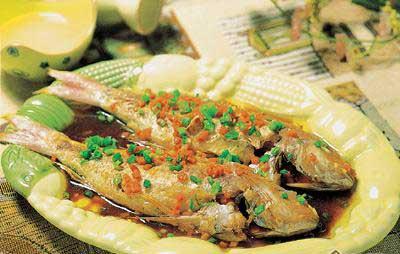
In some areas, fish (simplified Chinese:鱼; yú) is included, but not eaten completely (and the remainder is stored overnight), as the Chinese phrase "may there be surpluses every year" (simplified Chinese: 年年有余; nián nián yǒu yú) sounds the same as "may there be fish every year." |
In some areas, fish (simplified Chinese:鱼; yú) is included, but not eaten completely (and the remainder is stored overnight), as the Chinese phrase "may there be surpluses every year" (simplified Chinese: 年年有余; nián nián yǒu yú) sounds the same as "may there be fish every year."
Several foods are consumed to usher in wealth, happiness, and good fortune. Several of the Chinese food names are homophones for words that also mean good things, such as:
 |
|
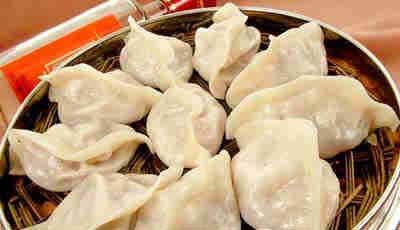
Jiao zi (dumplings) (Chinese:餃子)—Eaten traditionally in northern China because the preparation is similar to packaging luck inside the dumpling, which is later eaten. |
Jiao zi (dumplings) (Chinese:餃子)—Eaten traditionally in northern China because the preparation is similar to packaging luck inside the dumpling, which is later eaten.
 |
|
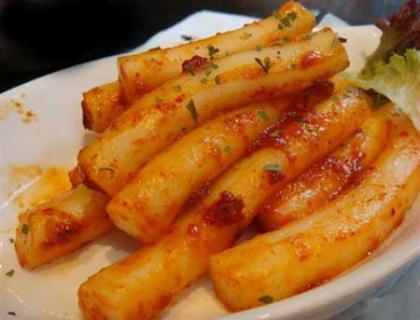
Nian gao (Chinese:年糕)—Most popular in eastern China (Jiangsu, Zhejiang and Shanghai) because its pronunciation is a homophone for "a more prosperous year ("年高" literal: year high)". |
Nian gao (Chinese:年糕)—Most popular in eastern China (Jiangsu, Zhejiang and Shanghai) because its pronunciation is a homophone for "a more prosperous year ("年高" literal: year high)".