Top 2 wine containers inside the Forbidden City


The Palace Museum, founded in 1925, is a national museum housed inside the Forbidden City, the imperial palace of the Ming (1368-1683) and Qing (1644-1911) Dynasties and a World Heritage site since 1987.
Located at the center of Beijing, the Palace Museum holds over 1,807,558 artifacts, including paintings, pottery, inscribed wares, bronze wares, and court documents. There are over a million rare and valuable works of art in the museum's collection. Here is a list of the top twowine containers to be found at the museum.
一、Yaxu Rectangular Vessel (亚方尊)
Where to be found: the Bronzeware Hall of Chengqian Palace 承乾宫青铜器馆
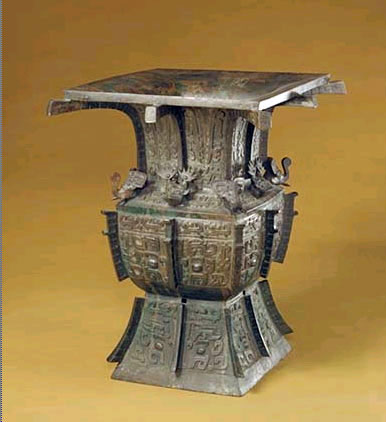
Yaxu Rectangular Vessel.
The bronze Xu Rectangular Vessel is a wine container popular from the Shang Dynasty (1556 BC – 1046 BC) to the Warring States period (475 BC -221 BC). It is 38 centimeters wide, 45.5 centimeters tall with a caliber measuring 33.6 * 33.4 centimeters. The vessel weighs 21.4 kilograms and has four handles on each side in the form of an elephant's head. Between the two handles are decorations of other unknown animals. The body is covered with motifs of dragons and animal masks against a thunder pattern.
二、Jinou Yonggu Cup of Emperor Qianlong (乾隆金瓯永固杯)
Where to be found: the Zhenbao Hall of Ningshou Palace 宁寿宫珍宝馆
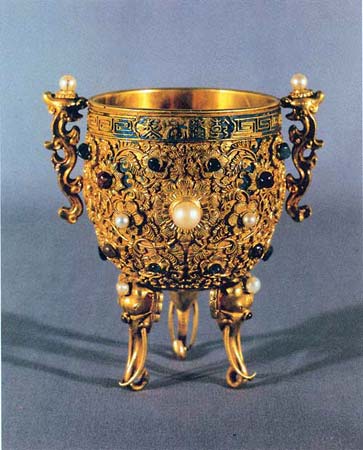
Jinou Yonggu Cup of Emperor Qianlong.
This wine cup is a cornerstone of the imperial collection of Qing Dynasty. In 1739, Emperor Qianlong ordered it made on his 30th birthday, engraving "Jinou Yonggu," a wish of eternal stability for the Qing Dynasty. The cup is 12.5 centimeters tall and has a caliber measuring 8 centimeters. Its stems are 5 centimeters high. There are many veins engraved around the cup.
According to the Record of Royal Household Bureau, Emperor Qianlong paid great attention to making the cup. It was made of precious materials including gold, pearls and diamond with quality craftsmanship and refined many times to the Emperor's specifications. Hence, this gold cup is traditionally considered to be the greatest treasure of the imperial palace.