


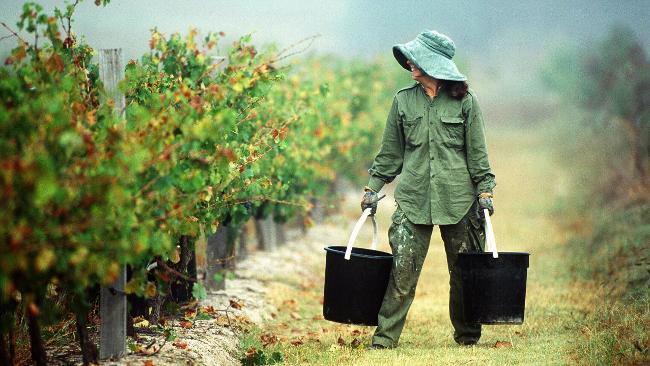
Picking grapes at harvesting time. Picture: Jim McEwan Source: The Courier-Mail
RISING sales of supermarket wine brands are likely to severely impact the future of Australia's boutique wine sector.
Wine industry leaders have predicted the burgeoning number of virtual or home-brand style wine labels will push small wine producers out of business as stores owned by the big two, Woolworths and Coles, increase sales of what is known as private branding.
The big two supermarket chain liquor stores Woolworths-owned Dan Murphy's, BWS and Woolworths Liquor as well as Coles'-owned Vintage Cellars, 1st Choice and Liquorland have been accused of cutting the route to market for many of Australia's 2500 plus wine producers already hurting from a range of oversupply, and global financial crisis issues.
More than 100 labels owned by the big two retailers now occupy the shelves of at least 2000 outlets across Australia, selling large-volume, directly purchased bulk wine or purpose-made product via shelf-created brands.
Growth in private label sales of more than 20 per cent in the past year is having a profound effect on the industry, Winemakers Federation of Australia chief executive Stephen Strachan says.
"The opportunities for a lot of our small producers to get to market have been cut off," Mr Strachan says.
"It's a zero-sum game they're taking market share from existing brand owners," he says.
"They control the shelf space and that gives them a fair bit of power over the exisiting brand owners."
Coles Liquor national strategy and marketing manager Grant Ramage has hit back at the claims arguing that the private label and cleanskin sector of their sales is actually part of the solution to Australia's oversupply of wine.
Private labels and cleanskins mostly come from producers who have lots of wine to sell, Mr Ramage says.
"We're a big part of the solution," he says.
"Where else is that wine going to be sold and it has to be sold," he said.
The cleanskin and private label part of Coles' business amounts to only 20 per cent of its liquor turnover, according to Mr Ramage, with the remainder still coming from existing Australian wine producers.
"We have relationships with everyone from the big guys like Treasury Wine Estates through to mum and dad producers," Mr Ramage says.
The bargain sector continues to grow, however, and is now considered a "massive turning point" for the industry as a whole, Wine Grape Grower Australia executive director Lawrie Stanford argues.
The implications are the same for grape growers as they are for winemakers, he says.
The trend is inevitable, he says, but the challenge is that the cycle of chasing lower prices will damage the wine industry as a whole.
"No one begrudges consumers the opportunity for lower prices," Mr Stanford says.
"But not if the Australian wine industry goes broke."