Study: Tainted Valley water would cost $150m to clean


JOHN WALKER / THE FRESNO BEE
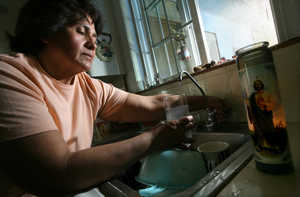
Because of contaminants, Maria Elena Avila Orozco Martinez must use an in-sink water filter in order to drink water from the tap in her East Orosi home.
More than 1 million Valley residents at times get drinking water tainted by fertilizers, sewage and animal waste, a new study shows.
Poverty-level families must buy bottled water, resulting in monthly bills several times higher than they should pay for safe drinking water. And the cost to clean up the problem would be at least $150 million, says Pacific Institute, the Oakland think tank, which added up the price tags on proposed projects that have not been funded.
The study, being released today, is the first to link both the extent of the contamination and the financial burden on residents. It focuses on drinking water tainted by nitrates, a chemical that moves into water wells from agriculture and septic systems.
Using the latest state monitoring data available, the study says three-quarters of California's nitrate violations in 2007 occurred in the San Joaquin Valley. Many small community water systems in rural areas have nitrate problems.
The institute also surveyed water users in areas such as Porterville.
Families in such places as Tulare County must pay more than $100 a month for both water service and bottled drinking water, the study says.
"The average cost for many families is three times higher than they should pay," said institute analyst Eli Moore. "This is a widespread problem in the Valley."
The institute suggests local water authorities need to do a better job of informing residents when contamination occurs. The violations of the federal drinking water standard can occur sporadically, so residents do not always know when the water has been contaminated.
The study also suggests state officials need to more closely regulate nitrate sources, such as irrigated agriculture.
State and federal officials say they have not yet read the study.
Tulare County, one of the most productive farming counties in the country, is the epicenter of the problem, the study says. The state tested 181 tap-water wells in 2006, finding more than 70 tainted with nitrates.
For years, small Tulare County communities, such as Seville, Tonyville and East Orosi, have had water laced with nitrates, which cause a potentially fatal blood disease in infants. Nitrates also have been linked with problems in pregnancy, cancer, stomach ailments and rashes.
No broad investigation of health problems has ever been done in such communities, the study says.
Two weeks ago, a United Nations lawyer visited Seville as part of the organization's campaign to provide safe drinking water around the world. The lawyer said the Tulare County situation violates basic human rights.
Both the U.N. and the Pacific Institute say families with poverty-level incomes pay far too much for water. Many in Tulare County must pay for monthly water service as well as buying bottled drinking water.
In Seville, the U.N. lawyer heard from residents who spend more than $120 per month. With an average income of $16,000, about 11% of household income goes to water service in the town of 400 north of Visalia.
In a survey of Valley residents affected by tainted wells, the Pacific Institute found families spend an average of 4.6% of their income on water. The institute advocates a level set at 1.5% of the income, which officials say is a federal guideline for affordability.
Laurel Firestone, a co-director of the nonprofit Community Water Center in Visalia, participated in the study. She said her advocacy group has worked for years to help families and small water systems struggling to pay for safe water.
"We know that people are paying a considerable percentage of their income for safe water, and we know communities can't afford to rebuild their water systems," she said.
"This study confirms what we've been seeing for a long time."