Beijing at its best


 I made a trip to the old Peking for business, and lodged in the Hong Kong Jockey Club's Beijing Clubhouse on Jinbao Street.
The clubhouse, in the compound of the ancient royal residence Wang Fu Jing, was officially opened in 2008. The architectural style resembles the aesthetics of Ming and Qing imperial gardens, with a slight modern touch on the towers.
The first thing you should do is breakfast at the Centurion, and bask in the winter sun. Homemade bread here is fresh from the oven. Pair it with dark roasted coffee. Chinese noodles, cooked to order, are one of the most nourishing breakfasts in winter.
In the evening, conversing with friends over wine in the Derby in the basement, with the backdrop of live jazz is a good thing to do.
There are Chinese restaurants, Fortune Room and Beijing Oi Suen, in the Beijing Clubhouse.
Oi Suen specializes in Beijing, Shanghainese and Sichuan cuisine, offering authentic provincial tastes for its members. There is a noodle bar, where chef Tony Wan cooks all those intangible heritage dishes from south to north.
The chef's recommendations are the Beijing noodles with soy bean paste, Sichuan dan dan noodles and Yunnan romantic rice noodles.
My favorites are Lanzhou beef noodles, braised pork rib noodles, Shanxi sliced noodles, fresh shrimp plain soup noodles, Beijing handmade noodles, Beijing cat ear noodles and Hong Kong-style fishball noodles.
It is an obsession to just sit and watch Tony working his magic with the
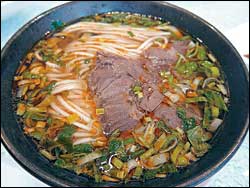 |
I had the regular Lanzhou beef noodles. I like the flavor of the beef soup, which is the essence left after overnight boiling of ox bones and herbs. Beyond doubt, the Chinese noodles are homemade. Just some sprinkling of chopped green garlic and parsley makes this a fine bowl of noodles.
Noodles are just one aspect of Oi Suen. There are old Peking snacks such as stuffed pancake, soy bean flour pastry (literally "rolling donkey" in local language), steamed rice cakes with sweet stuffing and pea flour cake.
The culinary craftsmanship makes Oi Suen worthy of mention alongside Golden Flower at Wynn Macau.
Fortune Room is an eatery for Guangdong cuisine, but from a Hong Kong perspective. It is also fit for a business gathering. The restaurant offers expensive items such as shredded abalone and all kinds of dishes cooked with assorted dried seafood, dim sum in Hong Kong-style, Guangdong side dishes and soups.
The decor is simple elegance. With 13 private dining rooms, it would make one more proud to entertain guests here than in the Hong Kong clubhouse.
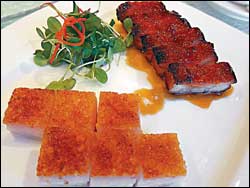
I have really developed a craving for the barbecued pork and roasted pork belly served here. In terms of texture, taste and presentation, they surpass that of many famed eateries in Hong Kong.
Bobby Lo, CEO of Beijing Clubhouse, has had extensive experience in working for the Hong Kong Jockey Club. He has done some serious culinary studies. Under his leadership, more than 20 chefs, mainly from Hong Kong, Beijing and Shanghai, have been devoting the best of themselves.
Lo gave me a tour of the kitchens. The hygiene is good, and no wonder it is the first clubhouse in Beijing to be awarded with Hazard Analysis and Critical Control Point, or HACCCP, certification.
Peking duck at the Fortune Room is almost known to all, inside and outside the restaurant. Quite a handful of critics agree that its roasted duck is among the best in Beijing.
I have attempted to expand my expedition by stepping into the equally famous Beijing duck specialists from Dadong, Made in China to Duck de Chine. Still, the taste is like home to me.
Stephen Ip, the retired economic development and labour secretary, is enjoying a second career as food critic.