Kluge winery set for multi-parcel absolute auction


Credit: Andrew Shurtleff/The Daily Progress
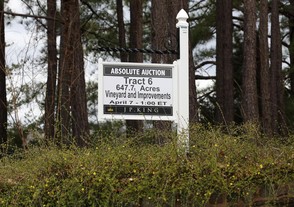
The Kluge Estate Winery and Vineyard will be sold at auction April 7 and April 8.
The foreclosed Kluge Estate Winery and Vineyard will be broken into sixl land tracts and sold separately at an April 7 auction while the equipment used for bottling, winemaking and tending vineyards will be peddled at a separate auction on April 8.
Farm Credit Bank, which bought the winery at auction in December for $19 million after the winery could not meet mortgage obligations, is auctioning the 901-acre winery and vineyard. Officials said the properties will be sold at whatever price the auction brings.
To keep the existing winery operation intact as it is today, a bidder would have to successfully bid on three of six tracts to acquire all of the winery buildings and vines. The bidder would than have to successfully bid on each piece of equipment on the following day.
William Moses, who ran the winery and vineyard with his wife, Patricia Kluge, declined to comment on the upcoming auction, noting that the couple no longer has control of the property. He said he hoped the winery and vineyard could continue operating after the auction.
“It’s something we worked very hard to create and we hate to see it end,” he said.
“[Kluge Estate] has been one of the brightest stars in the state wine industry,” said Todd Haymore, Virginia’s secretary of agriculture and forestry. “They worked hard to be a presence not only in Virginia but across the country and internationally. Unfortunately, the business plan was not sustainable.”
“It’s a sad day for the state [wine industry],” said Ann Heidig, president of the Virginia Wineries Association and partner in Lake Anna Winery. “They had a very aggressive business plan, but the economy was such that it had problems and it didn’t work.”
Heidig said most Virginia wineries are smaller than the Kluge operation, which was capitalized for making up to 50,000 barrels a year. There are an estimated 190 wineries in Virginia.
“The industry in Virginia is really looking pretty good,” Heidig said. “Kluge had a far-reaching plan that required them to over-capitalize, whereas most wineries in the state are smaller, family-owned businesses.”
Selling the winery in different tracts and the equipment separately will allow the bank to recoup more of its money than selling the winery and vineyard as an intact operation, officials said.
J.P. King, an Alabama-based auction firm, will preside over the sale of the land while Harry Davis and Co., of Pittsburgh, will sell off the equipment.
New owners of the properties will be able to build homes and implement a variety of uses allowed by right under Albemarle County zoning ordinances. Those uses include bed and breakfasts, rental cottages, timber harvesting and other agricultural business purposes.
“With the property having no minimum or reserve price, it provides an opportunity to enjoy it as a residential development, for recreational use or timber,” said Craig King, president and chief executive officer of the auction company.
Some members of the Virginia wine industry have expressed displeasure at the way the bank is handling the auction. They note that the Kluge property’s 160-plus acres of planted grapes comprise the largest single vineyard in the state and grow 10 varieties of grapes.
Many wineries have bought excess juice from Kluge grapes to help blend with their own wines, a common practice among wineries, especially those with small vineyards.
“The biggest concern I’ve heard across the state is what will happen with the fruit associated with the property. A lot of wineries bought excess juice from the Kluge operation to augment what they were growing and producing,” Haymore said.
While the Kluge winery is the first auction of an operation in Virginia, similar auctions have occurred in California’s Napa Valley and in Washington state.
“It may not be what members of the wine industry would like to see happen to the state’s biggest operation, but you have to remember that Farm Credit is a business and has a responsibility to maximize the return to its shareholders,” Haymore said.
The winery will be sold in tracts of 94 acres, 21 acres, 131 acres, 6 acres, 647 acres and a residential lot of just over 1 acre, according to J.P. King officials.
The 131-acre tract and 647-acre tract both feature the vineyard’s grapevines, various winery buildings and residences that could be used for staff homes or guest cottages.
The 131-acre site also has a barrel cave that holds about 500 barrels, a modular office and winery production building.
The 647-acre tract also has an event pavilion, a large office barn, a former carriage museum and three cottages. About 60 of the acres have “ideal slope and elevation” for future vine plantings.
The 6-acre lot includes the farm shop with a wine tasting room.
The 21-acre tract may be divided into five different residential lots, J.P. King officials said, and the 94-acre tract may also be used for residences or its wooded areas for timber. The smallest tract has a single-family home on the property.
The winery tracts will include the vines and buildings, but not much else. According to the Harry Davis and Co. website, everything from wine presses, strainers, tractors and other farming equipment, stainless steel fermenting tanks, pumps, compressors and laboratory equipment will be sold in separate lots at the auction.
Also up for bid will be bulk wine inventory, including red, white and dessert wines in barrels and vats.
Farm Credit officials told members of the Virginia wine industry recently that the auction does not preclude someone from purchasing the vineyards and wine equipment and keeping the operation running. Much of the equipment is likely to sell for far lower prices than new.
“Farm Credit told us that nothing prevents someone from making an entire purchase of the winery, they would just have to successfully bid on the tracts and equipment,” Haymore said. “It does, of course, make it a lot more difficult.”
The auction comes even as several companies, including Donald Trump’s Trump Organization, have negotiated with the different banks that own different Kluge properties recently foreclosed upon.
Officials with the Trump Organization have said they are negotiating to purchase as much as 1,300 acres owned by Kluge, including the nearly 24,000-square-foot Albemarle House. Trump representatives have said they negotiated purchasing more than 200 acres surrounding Albemarle House, land held by a trust for Kluge’s son, John W. Kluge Jr., and have first right of refusal on the mansion.
“It’s a beautiful area and the land is suitable for any number of uses, and Mr. Trump is very interested,” said Les Goldman, who made bids on Trump’s behalf at recent trustees auctions for the Kluge properties. “We’re interested in acquiring as much of the property as possible.”
Another company, Murcielago LLC, owns nearly 3,500 acres in the area and has also had its representatives bidding at various Kluge foreclosure auctions.
Besides the winery and Albemarle House, banks also have foreclosed on Kluge’s Vineyard Estates luxury residential project that adjoins the winery tracts. The development has more than 485 acres approved for 25 lots and a lot of open spaces. Some of those lots are permitted more than one home on the acreage while others are limited, county officials said.
Those properties are not up for auction on April 7 or April 8.