Judging Napa Cabernet’s class of 2007


EVEN in Napa Valley, where only the rare vintage is spoken of in less than superlatives, 2007 was considered nearly perfect for cabernet sauvignon. Wine Spectator rated it 99 on its 100-point scale, while other commentators, perhaps exhibiting more caution, used words like “splendid” and “extraordinary.”
While vintage can offer valuable insights to consumers, its importance is sometimes exaggerated. Great vintages do not necessarily make great wines, certainly not if the producer is not up to the task. Conversely, even in poor vintages, wines from great producers always have something interesting to say. And as in all matters of taste, evaluating vintages is often subjective. Yet of 2007 in Napa, few if any have dissented.
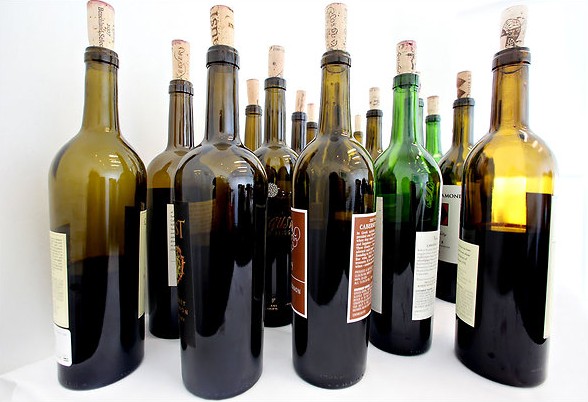
The widespread praise offered an ideal opportunity for the wine panel to appraise Napa cabernets. We tasted 20 bottles from the 2007 vintage, all under a $100 price cap. For the tasting Florence Fabricant and I were joined by the wife-and-husband team of Beth von Benz, a wine consultant, and Scott Mayger, the general manager of Telepan on the Upper West Side.
Many producers considered the 2007 growing season ideal, largely free of extreme heat and other threats, allowing them to harvest the grapes at what they judged to be the ideal point of ripeness. Did the more moderate weather lead to wines that depart from the dense, extravagant style that has prevailed in Napa for more than a decade?
Yes and no. We did not find as many ultra-ripe, jammy wines as we have in past vintages, nor were we overwhelmed by oak as has sometimes been the case. Instead, we found more freshness in the wines, and a more lively acidity. This was all to the good.
Yet we were disappointed to find so many uniform, monochromatic wines with little finesse. The fear of making wines that could possibly be termed “green” has led most Napa producers to forsake any semblance of the herbal flavors that were once integral to cabernet sauvignon wines. Instead of complexity, the rule seems to be all fruit, all the time, with power deemed preferable to elegance.
“Most seem made to fit a profile, in a commercially successful style,” Scott said.
It’s hard to argue with success, and no, this is not a new story. But it continues to disappoint me, even as I know that some Napa producers are aiming for more subtlety and nuance. Admittedly, 20 bottles barely put a dent in the Napa selection. Perhaps I would have felt better if some of my annual favorite producers in this price range, like Corison and Frog’s Leap, had been in the blind tasting. Yet it was a representative sample of what consumers will find in the marketplace.
Even in these recessionary times, the $100 price cap ruled out many of the Napa glamour names. Cult cabernets were certainly out of bounds, as were estate-grown wines from many solid producers. At the same time, we did stumble upon some bottles from classic Napa names that had been discounted. We found the Georges de Latour Private Reserve from Beaulieu, one of Napa’s historic bottlings, for $90, down from $120, for example, and we got Beringer Vineyards Private Reserve, another $120 bottle, for $85.
Even so, our No. 1 wine was a $47 bottle from Faust, owned by the wine magnate Agustin Huneeus of Quintessa, a higher-end Napa producer, and Veramonte in Chile. It displayed not only the freshness of the vintage, but harmony, restraint and an underlying complexity.
At No. 2 was a very different sort of bottle, the Newton Unfiltered, which was certainly on the dense and concentrated side of the spectrum yet well balanced. It was perhaps not a wine to my personal taste, but I could not ignore its quality. No. 3 was the Clos du Val, almost always a well-structured wine, made in a restrained style more typical of Napa 20 years ago.
Our No. 4 bottle, Covenant, is a kosher wine, and proves the point of Jeff Morgan, a proprietor at Covenant and a wine writer, that kosher wines can be made without compromising on quality. This wine was fresh and lively, reflecting the vintage, with plenty of power, but lacking a little structure and complexity. At $95, it was one of the most expensive wines in the tasting, though not the most expensive wine in our top 10. That was the Keever at $97, our No. 10 bottle, a powerful, ultra-ripe wine that in its thick texture and sweet flavors showed more of the recent Napa profile than it did the 2007 vintage.
Neither the Beaulieu nor the Beringer made our top 10. The Beaulieu was dense, powerful and almost overwhelming, as if flavors had been layered on with a trowel, a far cry from the austerely elegant Georges de Latours of yore. The Beringer seemed fresh and in that sense reflected the vintage, yet was big and broad with little shape or finesse. Other big names that did not make our top 10 included the Cakebread Benchland Select ($99) and the Paul Hobbs ($65).
Neither the Beaulieu nor the Beringer made our top 10. The Beaulieu was dense, powerful and almost overwhelming, as if flavors had been layered on with a trowel, a far cry from the austerely elegant Georges de Latours of yore. The Beringer seemed fresh and in that sense reflected the vintage, yet was big and broad with little shape or finesse. Other big names that did not make our top 10 included the Cakebread Benchland Select ($99) and the Paul Hobbs ($65).