Maotai, a Town of Wine


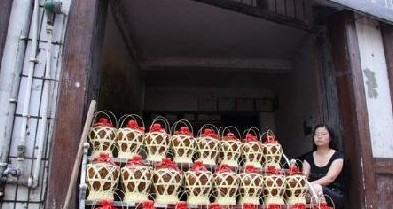
Wine shops in Maotai town (Photo Source:CRIENGLISH.com)
On our way from the city of Renhuai to Maotai, we could smell the fragrance of wine becoming stronger as we drew nearer. We found wine jars and large wine containers in front of every house on both sides of the road. A local official who accompanies us said that the wine made by households here is mainly sold to wine factories in neighboring Sichuan province. If a family can produce two tons of wine, they'll have more than enough money to support themselves for the rest of their lives.
The world renowned Maotai Wine Company takes up around two thirds of the town's area and over one sixth of the town's population to work for the company. It is believed that Maotai possesses a unique climate and vegetation that contributes to the unparalleled taste of the drink.
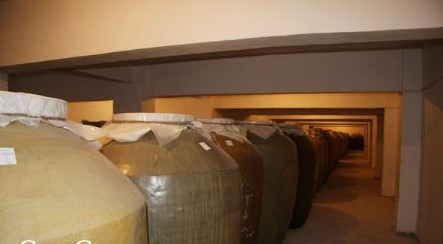
In the cellar of Guizhou Wuyou Wine Co. Ltd.(Photo Source: CRIENGLISH.com)
In the 1970s, the local government attempted to build another Maotai wine company in nearby Zunyi in order to increase the drink's production. They employed the exact same materials Maotai wine is made from, such as sorghum and water from the Chishui River. But the factory failed to make wine of the same quality.
People say the unique geographical location and climate account for this. Even today, the Maotai Wine Company produces only twenty thousand tons of wine a year. As the wine of China, most of its output goes to governmental institutes, armies and overseas consumers.
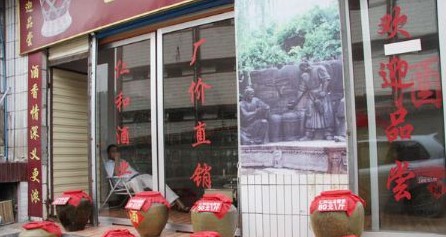
Wine shops in Maotai town(Photo: CRIENGLISH.com)
In the 1970s, the local government attempted to build another Maotai wine company in nearby Zunyi in order to increase the drink's production. They employed the exact same materials Maotai wine is made from, such as sorghum and water from the Chishui River. But the factory failed to make wine of the same quality.
People say the unique geographical location and climate account for this. Even today, the Maotai Wine Company produces only twenty thousand tons of wine a year. As the wine of China, most of its output goes to governmental institutes, armies and overseas consumers.
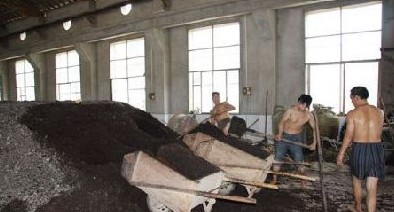
Wine makers in a private wine factory load fermented sorghum. (Photo Source: CRIENGLISH.com)
Numerous small wine shops line the streets of Maotai. With white walls and black-tiled roofs, the shops are made in the traditional Hui style. Their wine, home-made or bought from small family wine workshops, is contained in jars and sold at prices ranging from 20 to 200 yuan per kilogram. More often than not, we saw the shop owners, leisurely sitting on cane chairs or lying on a sofa, selling their wine. It is hard to tell if they are drunk from their quality wine or from their easy life.